Is Rancho California District Water Hard?
Yes, very hard. Rancho California District’s water measures 151–230 mg/L as CaCO₃ (8.8–13.5 gpg) across the system. Hardness affects scale and appliances; it has no federal health limit.
- Rancho California Water District · CA3310038
- Purity Score 57 · Fair
- Confidence: moderate
A scale and appliance question, not a health one
- 01ScaleMineral build-up in kettles, pipes and fixtures.
- 02Water heatersScale on heating elements lowers efficiency over time.
- 03SpottingWhite marks on glassware, taps and shower screens.
- 04Less latherSoap and detergent lather less and leave residue.
Check your own hardness before buying a softener.
Softener sizing depends on your gpg and household use. A test strip or your utility's water-quality report is enough to start.
Test your own tap
Screening tells you if something is worth a closer look; a lab result is the number you can act on.
As an Amazon Associate, PurityMap earns from qualifying purchases. Affiliate disclosure.
Screening: quick check, not lab-grade
WeAQUA DoubleCheck Water Hardness Test Strips (200)
WeAQUA
Total water hardness
- Turnaround: About 1 minute
What it can't tell you: It measures hardness only, so it tells you nothing about lead, PFAS or bacteria.
What a softener takes in Rancho California District
At 11.1 gpg (the middle of the reported range), an efficiency-rated softener uses up to about:
| Household | Salt per year | Regeneration water per year |
|---|---|---|
| 2 people | 180 lb (about 5 × 40-lb bags) | 3,000 gal |
| 3 people | 270 lb (about 7 × 40-lb bags) | 4,600 gal |
| 4 people | 360 lb (about 9 × 40-lb bags) | 6,100 gal |
- Equipment: about $500–$1,500 for the softener itself. Installation is quoted locally; PurityMap doesn't publish a figure.
- Softening at this level adds about 83 mg of sodium per quart.
- Assumes 75 gallons per person per day. Older or non-rated softeners can use more salt.
Sources: Penn State Extension (2025) · NSF/ANSI 44 listings
Certified for a concern found here
Each product has a current certification record covering water hardness.
A product appears here only when a current certification record covers at least one identified concern; every concern stays listed. The retail offer is looked up afterwards and never changes which products appear or their order. As an Amazon Associate, PurityMap earns from qualifying purchases. Affiliate disclosure.
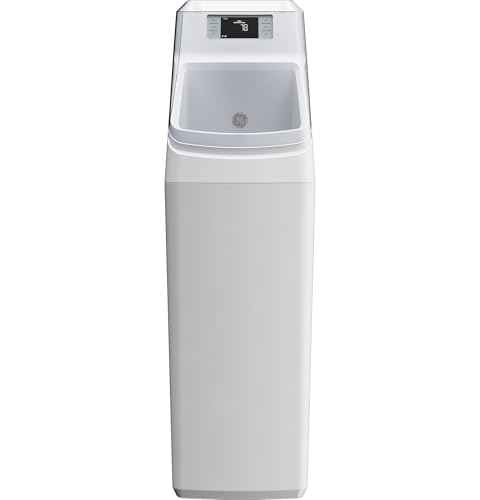
GE GXSH35W Water Softener (35,000-grain)
Fit for Rancho California District’s record
- Hardness / scaleEligible · evidence match✓
Not suitable for
- Treating only the drinking-water tap
- Lead from plumbing after the point it treats
- Anyone who can't plumb, drill or hire an installer
- Renters who can't modify plumbing

Kenmore 420 Water Softener (40,000-grain)
Fit for Rancho California District’s record
- Hardness / scaleEligible · evidence match✓
Not suitable for
- Treating only the drinking-water tap
- Lead from plumbing after the point it treats
- Anyone who can't plumb, drill or hire an installer
- Renters who can't modify plumbing
Frequently asked
Is Rancho California District water hard?
RANCHO CALIFORNIA WATER DISTRICT's latest water-quality report puts hardness at 151–230 mg/L as calcium carbonate (8.8–13.5 grains per gallon) across the system, which is very hard at the midpoint. Water above about 7 gpg is generally considered hard.
Do I need a water softener in Rancho California District?
At the midpoint of the reported range (11.1 gpg), many households choose a softener to cut scale on fixtures, water heaters and appliances. It is a comfort and maintenance choice, not a health requirement.
How much does a water softener cost in Rancho California District?
The softener itself costs about $500–$1,500 (Penn State Extension); installation is quoted locally. At the midpoint of the reported range (11.1 gpg), an efficiency-rated softener for a 3-person home uses up to about 270 lb of salt a year (about 7 40-lb bags) and 4,600 gallons of water to regenerate.
Is hard water a health concern?
Hardness (calcium and magnesium) has no federal health-based limit. It affects scale, soap and appliance life, not the safety of the water. Softening adds some sodium, which matters for people on low-sodium diets.