Under-Sink Water Filters at a Glance
What they are
Compact filtration systems installed beneath the kitchen sink that treat only the drinking water line.
Why they matter
They provide high-quality filtered water for drinking and cooking without filtering the entire home.
What they treat
Depending on the system they can reduce chlorine lead PFAS fluoride arsenic and other dissolved contaminants.
The Ultimate Guide to Under-Sink Filtration Systems (The Antidote)
Identification: The Under-Sink Filtration Encyclopedia
While a whole-house water softener protects your home’s infrastructure from mineral damage, the under-sink filtration system is the localized “antidote” for the water you actually consume. These systems represent the final line of defense in the 2026 home water treatment strategy, targeting contaminants that a softener cannot address, such as chlorine, lead, microplastics, and pharmaceutical residues. By installing filtration at the “Point-of-Use” (POU), you ensure that every glass of water used for drinking, cooking, and coffee is purified to the highest possible standard right before it leaves the tap.
Understanding the Under-Sink Logic
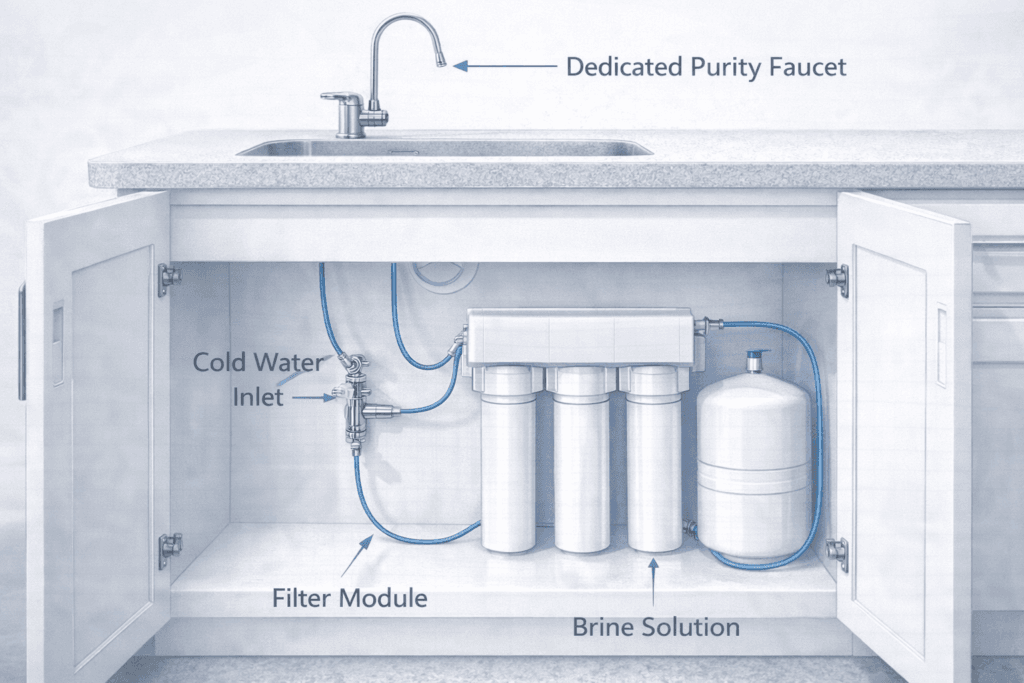
An under-sink water filter operates by diverting water from your primary cold-water line through a series of specialized media before it reaches a dedicated faucet. This is distinct from whole-house systems (Point-of-Entry) which treat all water entering the home, including the water used for flushing toilets or watering lawns. The under-sink approach is more efficient for high-purity needs because it focuses its filtration power on a smaller volume of water, allowing for more intensive purification technologies that would be too slow or expensive for whole-house use.
In the context of modern water quality, the under-sink system serves as a “polishing” stage. Even if your municipal water is treated at a central plant, it often travels through miles of aging infrastructure. During this journey, water can pick up sediment, heavy metals from old plumbing, and chemical byproducts. In 2026, the rise of “forever chemicals” like PFAS and microplastics has made this final stage of filtration a necessity rather than a luxury for many households.
The Role of Source Water in System Selection
The specific filtration technology you need is dictated by what is already in your water. This is why testing is the foundational step in the PurityMap business model.
Municipal Water Challenges Most city-treated water contains chlorine or chloramines used for disinfection. While effective at killing bacteria, these chemicals affect the taste and smell of water and can create harmful disinfection byproducts (DBPs). Furthermore, city water often contains trace amounts of fluoride and, in older urban areas, potential lead contamination from service lines.
Well Water Challenges Private wells do not benefit from municipal treatment and are susceptible to biological contaminants like bacteria and cysts, as well as agricultural runoff including nitrates and pesticides. Well water also frequently contains high levels of iron and manganese, which can stain fixtures and clog delicate filtration membranes if not addressed.
Signs You Need an Under-Sink Filter
Beyond technical data, your home often provides sensory clues that your water requires an antidote:
- Taste and Odor: Water that tastes like a “swimming pool” (chlorine) or has a metallic aftertaste is a prime candidate for carbon or KDF filtration.
- Visible Particles: “Cloudy” water or sediment in the bottom of a glass indicates a need for multi-stage sediment filtration.
- Health Concerns: For families with infants or those on restricted diets, removing fluoride, nitrates, or lead becomes a critical safety requirement.
- Lifestyle Preferences: If you find yourself buying bottled water or using a slow gravity-fed pitcher, an under-sink system provides a permanent, high-flow alternative that saves money and reduces plastic waste.
By identifying these symptoms and matching them with a specific filtration “antidote,” you move from guessing about your water quality to actively managing it.
Analysis: The Science of Multi-Stage Filtration
Under-sink filtration is rarely a single-step process. To provide a comprehensive “antidote” to modern contaminants, these systems utilize a sequence of specialized barriers, each designed to trap or neutralize specific threats based on their physical size or chemical properties. In the world of 2026 water treatment, the most effective systems are those that stack these technologies to ensure no contaminant slips through.
The Physics of Mechanical Filtration
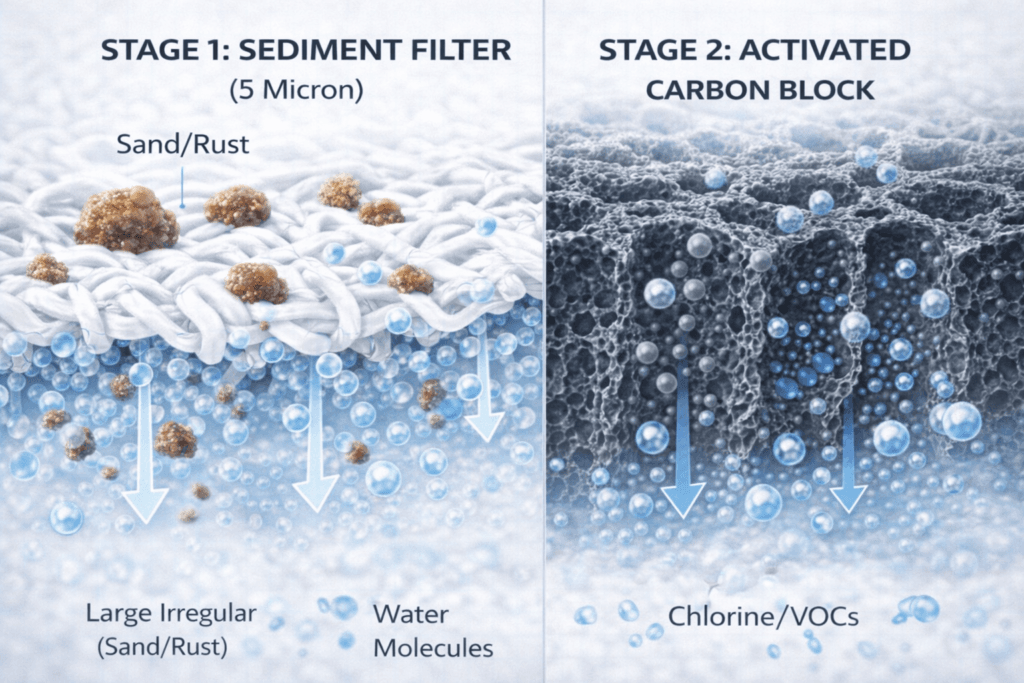
The first line of defense is mechanical filtration, which acts like a microscopic net. These filters are rated by microns, a unit of measurement equal to one-millionth of a meter. To put this in perspective, a human hair is roughly 70 microns wide.
- Sediment Filters: Usually made of pleated polyester or spun polypropylene, these filters typically range from 1 to 5 microns. Their primary job is to physically block “macro-particles” such as sand, silt, rust, and scale. Removing these early in the chain is vital because it prevents the more expensive chemical filters downstream from becoming prematurely clogged.
- Ultra-filtration (UF): Some high-end under-sink systems include an ultra-filtration stage with pores as small as 0.01 microns. At this level, the filter can physically block bacteria, cysts, and even some viruses without the need for chemicals or electricity.
The Chemistry of Adsorption and Absorption
Once the physical particles are removed, the water enters the chemical treatment phase, primarily dominated by Activated Carbon. This is the workhorse of the filtration world.
- Activated Carbon Block (ACB): Carbon is “activated” through a high-temperature process that creates millions of tiny pores, giving it a massive surface area. A single gram of activated carbon can have a surface area equivalent to several football fields. Through a process called adsorption, chemical contaminants like chlorine, pesticides, and Volatile Organic Compounds (VOCs) are pulled out of the water and “stuck” to the carbon surface.
- Granular Activated Carbon (GAC): This consists of loose carbon granules. While it allows for higher flow rates, it is generally less effective than carbon blocks because water can find “paths” around the granules, reducing contact time.
- Catalytic Carbon: A specialized form of carbon used specifically to target chloramines, which are increasingly used by municipalities but are much harder to remove than standard chlorine.
Targeted Reduction with Specialized Media
Beyond carbon, advanced under-sink systems integrate specialized media to target specific “hard-to-kill” contaminants:
- KDF (Kinetic Degradation Fluxion): This high-purity copper-zinc formulation uses a process called “redox” (oxidation-reduction). It is exceptionally effective at removing heavy metals like lead, mercury, and chromium. It also has bacteriostatic properties, meaning it prevents bacteria from growing inside the filter housing itself.
- Ion Exchange Resin: Similar to the technology in a water softener but at a smaller scale, these resins can target specific ions like fluoride or nitrates.
- Activated Alumina: This is the primary media used for the reduction of fluoride and arsenic in drinking water, providing a targeted solution for those in regions where these are high-risk contaminants.
The Cumulative Effect of the “Train”
By arranging these technologies in a specific order sediment first, then KDF, then carbon. the system creates a “filtration train.” This ensures that each stage protects the next. For example, the KDF media removes heavy metals that could otherwise “poison” the carbon, while the carbon removes the chlorine that could otherwise degrade the KDF.
Understanding this sequence explains why a “three-stage” or “five-stage” system isn’t just a marketing gimmick; it is a calculated engineering approach to water purification that addresses the chemical complexity of modern tap water.
The Solution: Choosing Your System
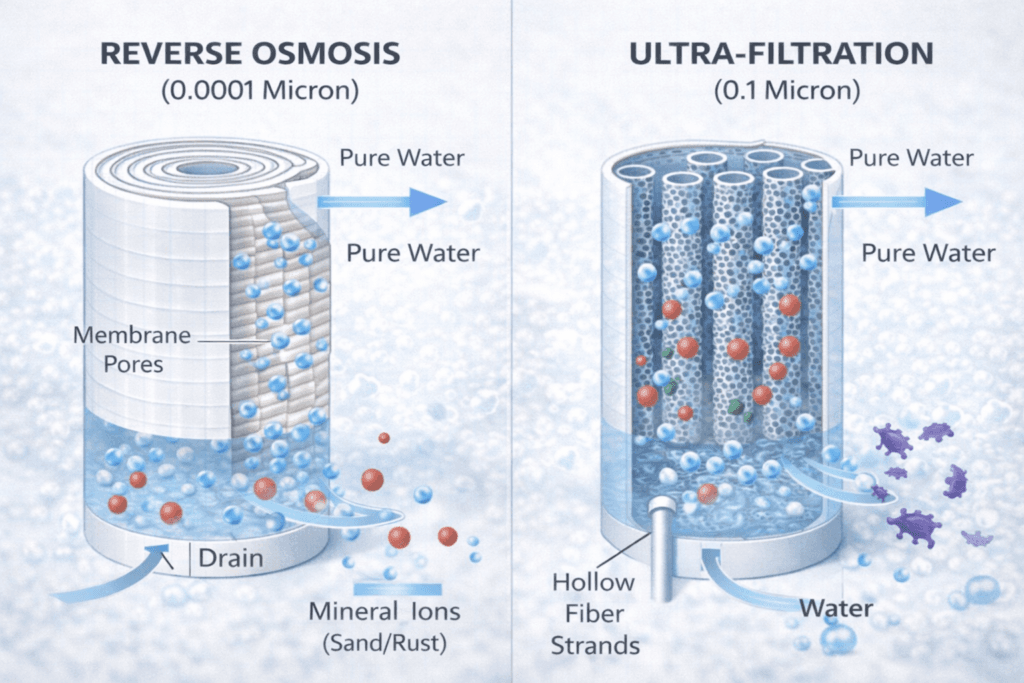
Selecting the correct “antidote” for your drinking water requires a balance between purity, efficiency, and mineral content. In the technical landscape of 2026, two primary technologies dominate the under-sink market: Reverse Osmosis (RO) and Ultra-Filtration (UF). While both use semi-permeable membranes, they operate on different physical principles and are suited for distinct water quality challenges.
Reverse Osmosis (RO): The Total Purification Solution
Reverse Osmosis is widely regarded as the most comprehensive filtration method available for residential use, capable of removing up to 99% of dissolved solids, heavy metals, and “forever chemicals” like PFAS.
How it Works: RO works by forcing highly pressurized water through a semi-permeable membrane with pores as small as 0.0001 microns. At this scale, the membrane acts as a molecular sieve, allowing only water molecules to pass while rejecting salts, lead, nitrates, and even viruses.
The 2026 Innovation: Tankless RO Traditional RO systems were often criticized for being slow and bulky, requiring a large storage tank that occupied valuable under-sink space. Modern tankless RO systems have solved this by using high-output membranes and internal booster pumps to deliver purified water in real-time. These systems now offer flow rates of up to 0.7 to 1.0 gallons per minute, effectively matching the speed of a standard faucet.
Key Considerations for RO:
- Purity Level: Excellent for removing nearly all contaminants, including fluoride and arsenic.
- Wastewater: Traditional systems wasted up to 4 gallons for every gallon produced. 2026 high-efficiency models have improved this to a 2:1 or even 1:1 ratio.
- Mineral Removal: Because RO is so effective, it strips out beneficial minerals like calcium and magnesium, often resulting in water with a “flat” taste. Most premium 2026 systems now include an alkaline remineralization stage to restore these minerals and balance the pH.
Ultra-Filtration (UF) & Multi-Stage Carbon: The Balanced Approach
Ultra-Filtration is the preferred choice for households that want high-quality water without the complexity, wastewater, or mineral loss associated with Reverse Osmosis.
How it Works: UF utilizes hollow fiber membranes with pore sizes typically ranging from 0.01 to 0.1 microns. This is fine enough to block bacteria, cysts, and silt, but unlike RO, it allows dissolved minerals to pass through.
The Advantage of UF:
- Zero Wastewater: Every gallon that enters the system comes out as filtered water, making it the most eco-friendly membrane technology.
- No Power Required: Unlike tankless RO systems that need electricity for pumps and sensors, UF systems operate solely on your home’s existing water pressure.
- Mineral Retention: By keeping natural minerals intact, the water maintains a “crisp” taste that many users prefer over the “distilled” taste of standard RO water.
Technical Comparison Table (2026 Standards)
| Feature | Reverse Osmosis (RO) | Ultra-Filtration (UF) |
| Pore Size | ~0.0001 Microns | 0.01 – 0.1 Microns |
| PFAS Removal | Excellent (90%+) | Limited (unless modified) |
| Bacteria/Viruses | Total Removal | Excellent (Bacteria) |
| Dissolved Solids (TDS) | Removes 95-99% | Does not remove |
| Wastewater | 1:1 to 3:1 Ratio | Zero Wastewater |
| Electricity | Required (for tankless) | Not Required |
The 2026 Sizing Formula
While whole-house systems are sized by mineral grain capacity, choosing the right under-sink “antidote” depends on matching the system’s output to your household’s daily consumption and the complexity of your water’s chemical load. In 2026, sizing an under-sink system is no longer just about fitting a tank in a cabinet; it is about ensuring the system can maintain a high-purity flow without frequent, costly filter replacements.
Step 1: Calculate Your Daily Drinking and Cooking Demand
To find the correct system capacity, you must first estimate how much water will actually flow through the dedicated faucet. A common mistake is undersizing based solely on “drinking water” while ignoring the water used for coffee, tea, pasta, and even pet bowls.
Use this 2026 Household Consumption Formula:
(Number of People × 0.75 Gallons) + (Daily Cooking/Ice Needs: ~2 Gallons) = Total Daily Purified Demand
For a family of four, this equals approximately 5 gallons per day. While this sounds low, a system with a low GPD (Gallons Per Day) rating or a small storage tank may struggle to provide this volume during “peak hours,” such as the morning coffee rush or evening meal preparation.
Step 2: Understanding GPD vs. GPM (Flow Dynamics)
In the under-sink market, you will see two primary metrics: GPD and GPM (Gallons Per Minute).
GPD (Gallons Per Day): This is the total amount of water the membrane can produce in 24 hours. For traditional tank-based RO systems, a 50 GPD or 75 GPD rating is standard. This is usually sufficient because the water collects in a pressurized storage tank, providing immediate flow when you open the tap.
GPM (Gallons Per Minute): This is critical for tankless systems. Since there is no storage tank, the system must purify water in real-time as you hold your glass. To avoid frustration, 2026 standards recommend a tankless system with at least a 600 GPD to 800 GPD membrane, which translates to a flow rate of approximately 0.5 to 0.7 GPM. Anything lower will result in a “trickle” that makes filling a large pot for pasta a tedious task.
Step 3: Factoring in Filter Lifespan and “Contaminant Loading”
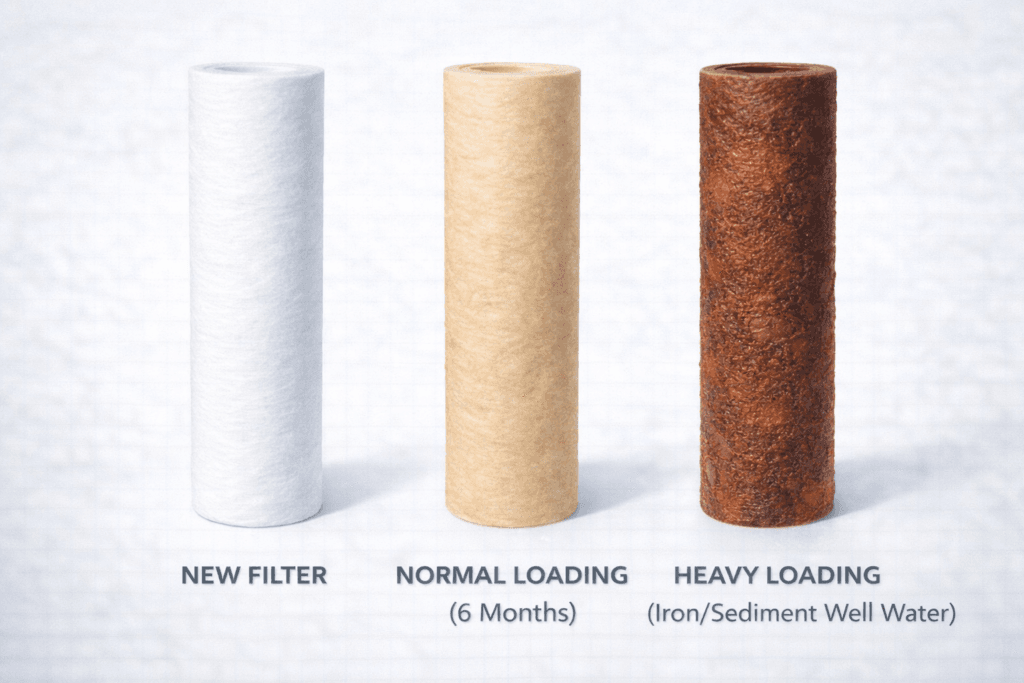
Sizing isn’t just about water volume; it is about how long the filters will last before the “Antidote” becomes ineffective. This is determined by the concentration of contaminants in your local water. a factor known as loading.
If your water has high levels of sediment or iron, a standard “one-size-fits-all” filter will clog significantly faster than the manufacturer’s estimate. For instance, a filter rated for 1,000 gallons might only last 400 gallons in a high-sediment environment. To solve this, you should “size up” your pre-filtration. Choosing a system with a dedicated, high-capacity 5-micron sediment pre-filter ensures that the more expensive carbon and RO stages are protected, extending the time between maintenance visits.
Step 4: The 2026 Sizing Matrix
To simplify your decision, we have developed this sizing matrix based on the most common household profiles found in our city data.
| Household Size | Primary Goal | Recommended Tech | Recommended Rating |
| 1-2 People | Basic Taste Improvement | 3-Stage Carbon/UF | 1,000+ Gallon Filter Life |
| 3-4 People | Lead/PFAS Removal | Tankless RO | 600 GPD Minimum |
| 5+ People | Total Purity/Cooking | High-Flow Tankless RO | 800 – 1,000 GPD |
| Well Water Users | Bacteria/Iron Protection | Multi-Stage RO + UV | 75 GPD (with tank) |
By following this formula, you ensure that your under-sink filter remains an asset to your lifestyle rather than a maintenance burden. Proper sizing leads to consistent water pressure, fewer filter changes, and a higher return on your investment in water quality.
Integration: Building Your Treatment Chain (Softeners + RO Systems)
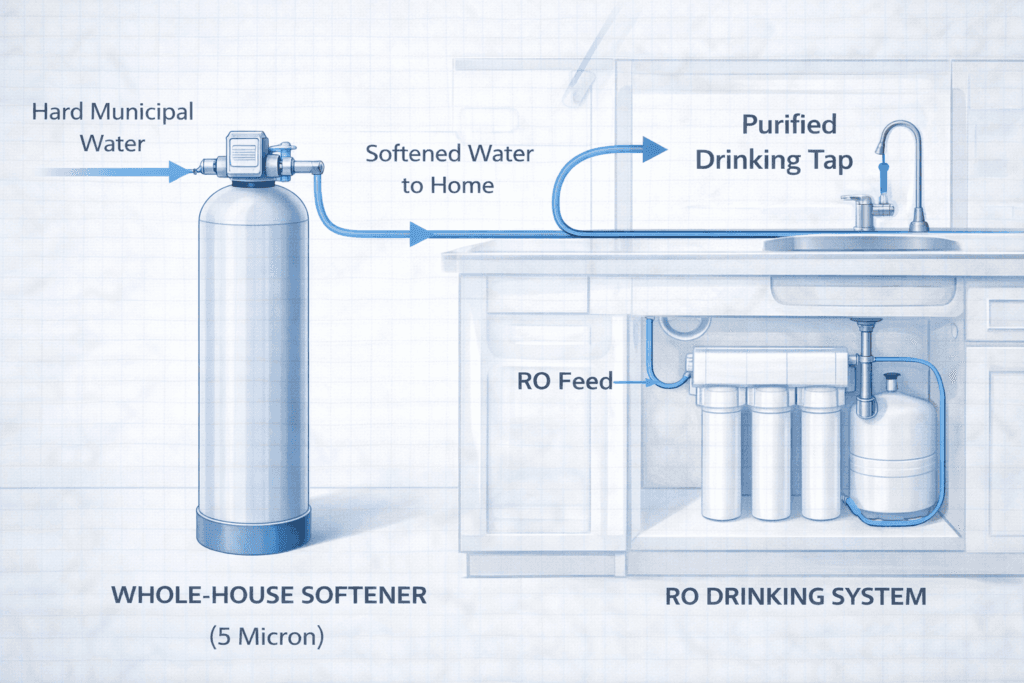
In a high-performance 2026 home water strategy, a single device rarely acts as a complete cure-all. True water mastery comes from Integration, the intentional sequencing of different technologies to address both “utility” water (for pipes and appliances) and “consumption” water (for drinking and cooking). The most powerful combination in the modern home is the pairing of a Whole-House Water Softener with an Under-Sink Reverse Osmosis (RO) System.
The Symbiotic Relationship Between Softening and Filtration
It is a common misconception that a water softener “purifies” water. As established in our Encyclopedia, a softener is an ion-exchange device designed to remove calcium and magnesium to prevent scale. It does not remove chlorine, lead, or chemicals. Conversely, an RO membrane is exceptionally delicate; while it can remove hardness, doing so quickly “scales up” the membrane, leading to premature failure and expensive replacements.
When integrated, the water softener acts as the Pre-Treatment Stage for the RO system. By removing the hardness minerals at the point of entry, the softener ensures that the water reaching the under-sink RO membrane is “soft”. This allows the RO system to focus entirely on chemical and biological contaminants, extending the life of the RO membrane by up to two to three times its standard rating.
Solving the Sodium Dilemma
One of the most frequent questions in our Solution Hub concerns the sodium added by salt-based softeners. During the ion-exchange process, a small amount of sodium is released into the water as hardness is removed. While this amount is typically less than what is found in a slice of bread, many health-conscious homeowners prefer to remove it entirely from their drinking supply.
The under-sink RO system is the perfect “antidote” to this issue. Because the RO membrane is a molecular sieve, it effectively strips out the added sodium ions along with other dissolved solids (TDS). This creates a “Best of Both Worlds” scenario:
- The Softener protects your water heater, dishwasher, and shower from scale and soap scum.
- The RO System removes the softener’s sodium byproduct along with lead, PFAS, and chlorine, delivering ultra-pure, bottled-quality water for consumption.
[Image showing a glass of water being filled from a dedicated RO tap, labeled “Sodium-Free & Purified”]
Integration with Carbon and UV Stages
For households with specific water profiles, the treatment chain can be further customized:
Carbon Post-Filtration Most under-sink systems include a final “polishing” carbon filter. This is the last stage the water touches before the faucet. Its job is to remove any residual tastes or odors that might linger in the storage tank or plastic tubing, ensuring the water tastes crisp and fresh.
UV (Ultraviolet) Disinfection For well water users, an RO system alone might not be enough to guarantee biological safety. In these cases, a final UV Stage is integrated into the under-sink chain. This stage uses ultraviolet light to scramble the DNA of bacteria and viruses, providing a non-chemical kill-stage that ensures your drinking water is sterile and safe, even if the well’s source water is compromised.
Designing Your Flow Path
To ensure maximum efficiency and system longevity, the sequence of your treatment chain should always follow this logic:
- Sediment Pre-Filter: Removes dirt/rust to protect all downstream equipment.
- Whole-House Softener: Removes hardness to protect plumbing and the RO membrane.
- Whole-House Carbon (Optional): Removes chlorine to protect the softener’s resin and the RO membrane.
- Under-Sink RO/UF: The final localized purification for drinking and cooking.
- Remineralization/Polishing: Restores taste and pH balance.
By viewing these systems as a single, integrated “Antidote Chain” rather than separate appliances, you create a home environment where water quality is never left to chance.
Maintenance & Troubleshooting
An under-sink filtration system is a precision instrument that requires proactive management to maintain its status as a reliable “antidote.” Unlike a water softener, which may only require salt refills, an under-sink system involves multiple consumable components sediment filters, carbon blocks, and semi-permeable membranes each with a finite lifespan determined by your home’s “contaminant loading.” Ignoring the maintenance schedule doesn’t just result in slower water flow; it can lead to “contaminant breakthrough,” where the very toxins you are trying to avoid begin to pass through the saturated media.
The 2026 Under-Sink Maintenance Blueprint
To ensure your system operates at peak purity, you should transition from installation to a tiered maintenance cycle. Modern 2026 systems often include built-in LED indicators or smartphone alerts to track filter life, but a physical inspection remains the best practice.
Quarterly Visual Inspections
Every three months, clear out the items stored under your sink to inspect the filter housings and connections. Check for “slow leaks” often characterized by a small amount of salt-like crusting around the fittings or dampness on the cabinet floor. This is also the time to check the pressure in your RO storage tank (if applicable) using a standard tire gauge. Most tanks should maintain a pressure of 5 to 7 PSI when empty to ensure a consistent flow to your faucet.
Bi-Annual Filter Replacement (Stages 1-3)
In most environments, the pre-filters(sediment and carbon)require replacement every six to twelve months.
- Sediment Filters: These should be changed the moment they appear dark brown or when you notice a significant drop in water pressure.
- Carbon Filters: Even if the flow remains strong, carbon loses its ability to adsorb chemicals like chlorine over time. To ensure chemical purity, replace these at the 6-month mark regardless of usage.
Membrane and Post-Filter Management (Every 2-3 Years)
The heart of your system (the RO or UF membrane) is more durable but still has a lifecycle.
- RO Membrane: With proper pre-treatment (like a water softener), an RO membrane can last 2 to 4 years. You can test its health using a TDS (Total Dissolved Solids) meter. If the “Product Water” (from the filter) is more than 10-15% of the “Feed Water” (from the tap), the membrane is failing and needs replacement.
- Polishing Filter: The final post-carbon filter should be replaced every 12 months to prevent any bacterial “biofilm” from developing in the storage tank or lines.
Troubleshooting Common System Failures
If your “antidote” isn’t performing as expected, use this diagnostic guide to identify and solve the issue before calling for professional service.
1. Slow Water Flow or “The Trickle”
This is the most frequent complaint and is usually caused by a drop in pressure within the system.
- The Cause: Clogged sediment pre-filters are the #1 culprit. Alternatively, in tank-based systems, the storage tank may have lost its air charge or the internal bladder may have ruptured.
- The Solution: Replace the Stage 1 filter. If the tank is the issue, try re-pressurizing it with a hand pump. If water squirts out of the air valve, the bladder is broken and the tank must be replaced.
2. Unusual Tastes or Odors
If your purified water begins to taste like chlorine or has an “earthy” smell, the chemical barrier has been compromised.
- The Cause: The carbon filters are exhausted and are no longer adsorbing chemicals. In some cases, if the system hasn’t been used for several weeks, bacteria may have grown in the stagnant water of the storage tank.
- The Solution: Sanitize the system using a manufacturer-approved cleaning kit and replace all carbon and post-polishing filters immediately.
3. Constant Gurgling or Drain Noise
For RO systems, it is normal to hear some water running to the drain during the purification process. However, it should stop once the tank is full.
- The Cause: A faulty “Auto Shut-Off Valve” (ASO) or a check valve that is stuck open. This allows water to run to the drain continuously, wasting thousands of gallons.
- The Solution: Inspect the ASO valve. If the drain water continues to flow 30 minutes after you’ve last used the faucet, the valve likely needs replacement.
4. Cloudy or “Milky” Water
Freshly filtered water sometimes appears white or cloudy when first poured.
- The Cause: This is almost always air bubbles, not contaminants. It is very common after a filter change as the new media releases trapped air.
- The Solution: Let the glass sit for 60 seconds. If the cloudiness clears from the bottom up, it is just air. If it doesn’t clear, check your filters for proper seating.
Quick Maintenance Reference Table
| Component | Function | Replacement Frequency | Warning Signs |
| Sediment Filter | Blocks dirt/rust | 6 – 12 Months | Drop in water pressure |
| Carbon Block | Removes chlorine/taste | 6 – 12 Months | Chlorine smell/taste |
| RO/UF Membrane | Removes TDS/PFAS/Bacteria | 2 – 4 Years | High TDS reading / slow flow |
| Remineralizer | Balances pH/Taste | 12 Months | Bitter or flat taste |
| Storage Tank | Holds purified water | 5 – 7 Years | Very low water volume |
By maintaining a disciplined service log and understanding these technical indicators, you ensure that your under-sink system remains a high-performance safeguard for your family’s health.
FAQs
Should I choose Reverse Osmosis (RO) or Ultra-Filtration (UF) for my home?
The choice depends on your specific water quality profile. If your goal is total purification, including the removal of fluoride, nitrates, and “forever chemicals” (PFAS), Reverse Osmosis is the gold standard because its 0.0001-micron membrane blocks nearly all dissolved solids. However, if you primarily want to remove bacteria and sediment while keeping natural minerals intact and avoiding wastewater, Ultra-Filtration is the more efficient, eco-friendly “antidote”.
How often do I need to replace the filters in an under-sink system?
o maintain peak performance, a tiered replacement schedule is required. Standard sediment and carbon pre-filters should be replaced every 6 to 12 months to prevent chemical breakthrough and protect the system’s membrane. The main RO or UF membrane typically lasts between 2 and 4 years, depending on your water’s hardness and the effectiveness of your pre-treatment stages. Always monitor your system’s flow rate and taste as these are the primary sensory indicators that your filters are saturated.
Does a Reverse Osmosis system waste a lot of water?
Traditional RO systems were known for a high waste-to-pure water ratio, sometimes losing 4 gallons for every 1 gallon produced. However, the high-efficiency 2026 models have dramatically improved this ratio through better membrane technology and booster pumps. Modern tankless RO systems now operate at a 1:1 or even 2:1 ratio, meaning they produce significantly less wastewater while delivering fresh, purified water on demand.
Do I need to add minerals back into my water after it has been filtered?
Because Reverse Osmosis is so effective, it removes beneficial minerals like calcium and magnesium along with the contaminants. This can result in water with a “flat” taste and a lower pH level. To solve this, most premium 2026 under-sink systems include an alkaline remineralization stage. This final filter adds a balanced amount of magnesium and calcium back into the water, restoring a crisp, natural taste and raising the pH to a healthy, alkaline level.
Can I install an under-sink filtration system myself?
Most modern under-sink systems are designed with “DIY-friendly” features, such as color-coded tubing and “twist-and-lock” filter cartridges that do not require tools. If you have basic plumbing knowledge and can manage a simple connection to your cold water line, installation usually takes about 60 to 90 minutes. However, if your setup requires drilling a hole in a granite countertop for a new faucet or if you are integrating the system with a refrigerator ice maker, hiring a professional ensures a leak-free installation and optimal system pressure.