Moderately hard.Denver’s water measures 6.1 gpg (105 mg/L as CaCO₃), in the USGS “moderately hard” band. Hardness affects scale and appliances; it has no federal health limit.
Scale builds slowly at this level, and it isn’t a health question
01ScaleMineral build-up in kettles, pipes and fixtures.
02Water heatersScale on heating elements lowers efficiency over time.
03SpottingWhite marks on glassware, taps and shower screens.
04Less latherSoap and detergent lather less and leave residue.
How Denver comparesCompared with the 150 other cities whose utility report gives a hardness value on PurityMap. A position here is not a verdict on the water.
Softer than 95 of 150 listed cities
Denver 6.1
0918+ gpg
What this means: Denver sits in the middle of the listed cities. Scale builds slowly at this level; it is a comfort and maintenance question, not a health finding.
City water and your tap
Hardness at your tap is usually close to the city figure.
Pipes don’t add hardness; a softener already in your home removes it. The city report gives the starting point. A test strip confirms what reaches your tap.
Commercial · test your own tapWe may earn a commissionAs an Amazon Associate, PurityMap earns from qualifying purchases. Offers never change which kits appear. Affiliate disclosure
Check your own hardness before buying a softener.
Softener sizing depends on your gpg and household use. A test strip, or the city's report above, is enough to start. You don't need a lab for hardness.
Screening: quick check, not lab-grade
WeAQUA DoubleCheck Water Hardness Test Strips (200)
WeAQUA
Measures
Total water hardness
Result
A screening range, not lab-grade
Turnaround
About 1 minute
Useful for
Confirming hardness and sizing a softener
What it can’t tell you: It measures hardness only, so it tells you nothing about lead, PFAS or bacteria.
At 6.1 gpg most homes don't need a softener; scale builds slowly at this level.
Commercial · treatment for the hardness found
Softeners and scale reducers for Denver’s moderately hard water
We may earn a commissionPurityMap earns a commission from these links. "Best choice" and "Budget pick" go to certified products first; commission never decides them. As an Amazon Associate, PurityMap earns from qualifying purchases. Affiliate disclosure
At 6.1 gpg, most households do not need a softener; scale builds slowly at this level. If you see scale on fixtures, in the kettle or on glassware, the options below are certified for hardness.
Why: it removes calcium and magnesium for every tap and appliance, the proven fix for scale. A salt-free conditioner changes how scale forms instead, without removing the minerals.
NSF/ANSI 44 · softener
Scale control · conditioner
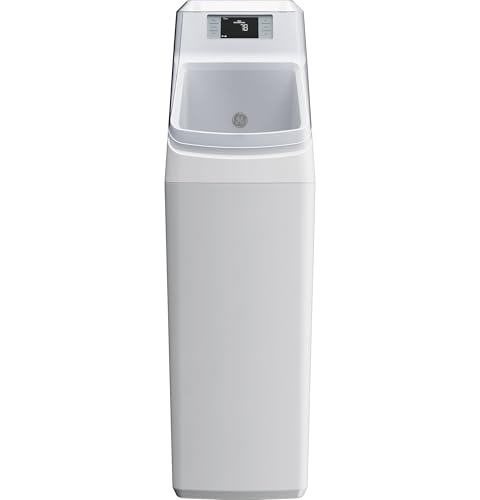
★ Best choice: GE GXSH35W Water Softener (35,000-grain), certified for hardness.
Softeners and scale reducers for Denver’s moderately hard water
Pick
Product
Details and price
Certification
Why it’s listed
Link
★ Best choice
Water softenerGE GXSH35W Water Softener (35,000-grain)GE Appliances
Renting? A test kit and the cost guide above are your best next steps.
PurityMap earns a commission from these links. "Best choice" and "Budget pick" go to certified products first; commission never decides them. As an Amazon Associate, PurityMap earns from qualifying purchases. Affiliate disclosure.
DENVER WATER BOARD's latest water-quality report puts hardness at 6.1 grains per gallon (105 mg/L as calcium carbonate), which is moderately hard. Water above about 7 gpg is generally considered hard.
How hard is Denver tap water in gpg?+
6.1 grains per gallon, in the USGS "moderately hard" band. On that scale soft is below 3.5 gpg, moderately hard 3.5–7, hard 7–10.5 and very hard above 10.5.
Is hard water a health concern?+
Hardness (calcium and magnesium) has no federal health-based limit. It affects scale, soap and appliance life, not the safety of the water. Softening adds some sodium, which matters for people on low-sodium diets.
Do I need a water softener in Denver?+
At 6.1 gpg, most households do not need a softener; scale builds slowly at this level.
What certification should a softener have?+
NSF/ANSI 44, the standard for water softeners, checked for the exact model in the certifier's listing (NSF, WQA or IAPMO). Its "Efficiency Rated" models use less salt and regeneration water.
Does a softener remove lead or PFAS?+
No. A softener exchanges calcium and magnesium; it is not a lead or PFAS treatment. For those, use a drinking-water filter whose current certification names them, such as NSF/ANSI 53 or 58.
Can I test my own water hardness?+
Yes. A hardness test strip gives a reading in grains per gallon within minutes, which is all you need to size a softener; hardness doesn't need a lab test.
Is a salt-free conditioner enough?+
It depends on what you want. A salt-free conditioner changes how scale forms but does not remove the calcium and magnesium, so a test still reads hard. An ion-exchange softener removes them for every tap and appliance.