Solution intelligence
Choosing a Lead Water Filter
Lead has a 15 µg/L federal action level, but public-health agencies state there is no known safe level of lead exposure. Because lead often enters water from a building’s own pipes, fixtures, and service line, a utility’s monitoring record cannot rule it out at your tap. The filters that reduce lead carry an NSF/ANSI 53 lead-reduction certification, or use reverse osmosis; this guide matches them to real situations and to certifications you can verify. Our recommendations are evidence-based, not paid placement; some links are affiliate links and PurityMap may earn from qualifying purchases at no extra cost to you, which never changes what the records support.
Guide scope, not a prescription These figures describe this authored solution guide. They do not show what is present in your water or prove that a specific product fits your household.
What this solution is
Lead has a 15 µg/L federal action level, but public-health agencies state there is no known safe level of lead exposure. Because lead often enters water from a building’s own pipes, fixtures, and service line, a utility’s monitoring record cannot rule it out at your tap. The filters that reduce lead carry an NSF/ANSI 53 lead-reduction certification, or use reverse osmosis; this guide matches them to real situations and to certifications you can verify. Our recommendations are evidence-based, not paid placement; some links are affiliate links and PurityMap may earn from qualifying purchases at no extra cost to you, which never changes what the records support.
Concerns named in this guideThese links describe the contaminants or characteristics this approach may address. Relevance depends on the exact technology and certified claim.
When it makes sense
Potential fit
- A city report showing lead at or above the action level
- Homes with pre-1986 plumbing, brass fixtures, or a lead service line
- Renters wanting a certified option without plumbing work
Not the right tool for
- Removing hardness or scale (that is a softener’s job)
- A guarantee without checking the exact model in an official registry
- Replacing the need to identify and remove a lead service line at the source
How it works
- 1
Look for NSF/ANSI 53 certified for lead reduction, or NSF/ANSI 58 for reverse osmosis. The certification covers the exact model, so verify your model in the official NSF, WQA, or IAPMO registry before buying.
- 2
Certified carbon-block filters (pitcher, faucet, under-sink) adsorb and trap lead particles and dissolved lead; capacity is finite, so replace cartridges on schedule.
- 3
Reverse osmosis reduces lead along with a broad range of dissolved contaminants at the kitchen tap.
- 4
Filtration treats water at that tap only; flushing standing water and, where present, replacing a lead service line address the source itself.
Models with a matching claim
Products appear only after the capability and certification checks above. Confirm the current certification listing and capacity for your own water before buying.

Under-Sink Carbon Block Filter
leadOur pick: Frizzlife Under Sink Water Filter System, NSF/ANSI 53&42&372 Certified, 8 Layer 0.5 Micron Water Filtration Reduces PFAS, PFOA/PFOS, Chloramine, Lead, Chlorine, with Brushed Nickel Faucet, SP99 New
Recommended because A dedicated carbon-block filter at the kitchen tap for households wanting a plumbed, higher-capacity option.
Also worth considering
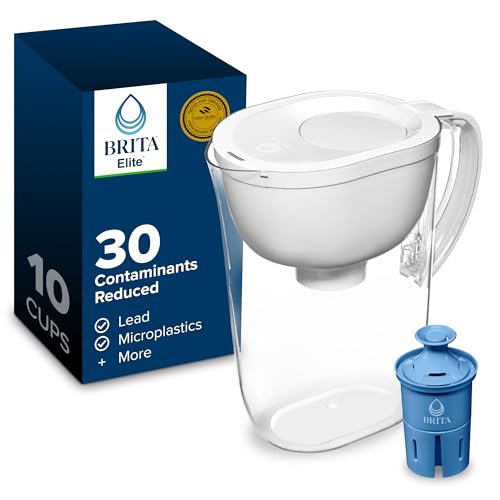
Water Filter Pitcher
leadOur pick: Brita Large 10-Cup Elite Water Filter Pitcher, WQA NSF/ANSI Certified, Reduces 99% of Lead, Microplastics, & 30 Contaminants, BPA-Free, Removes Chlorine Taste & Odor, 1 Filter Included, White
Recommended because The lowest-effort certified option for drinking water; choose a pitcher whose certification names lead and keep to the cartridge schedule.

Faucet-Mount Filter
leadOur pick: PUR Plus Horizontal Faucet Mount Filtration System with Lead Reduction
Recommended because Attaches without tools for renters; confirm the model carries an NSF/ANSI 53 lead-reduction claim.
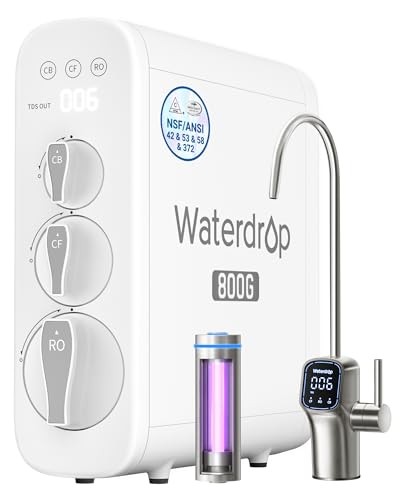
Under-Sink Reverse-Osmosis System
leadOur pick: Waterdrop G3P800 Tankless Reverse Osmosis Water Filter System, 800 GPD
Recommended because Reduces lead along with arsenic, nitrate and PFAS for households wanting the broadest reduction at the kitchen tap.
Recommendations are matched to the published findings first; the commercial offer is looked up afterwards and never changes which products qualify. As an Amazon Associate, PurityMap earns from qualifying purchases. Affiliate disclosure.
Frequently asked questions
Which filter removes lead?
Filters certified under NSF/ANSI 53 for lead reduction, and reverse-osmosis systems (NSF/ANSI 58), are the independently certified options. The certification must name lead and cover your exact model.
If my city is not above the action level, can I skip a filter?
Not necessarily. A system record describes delivered water; lead can still be added by household plumbing. A certified home test is the only way to measure your own tap, especially in a home with pre-1986 plumbing.
Does flushing the tap help?
Running the tap until the water turns cold can reduce lead that has been sitting in plumbing. It is a useful habit but not a substitute for a certified filter or for removing a lead service line.
Sources and methodology
This solution guide describes treatment capability, not local water quality. PurityMap keeps local findings on water-system reports and matches products only after a documented concern and relevant certified claim align.
How PurityMap evaluates water and treatment →