Private wells
Alaska well water: what to test for
The USGS national arsenic and nitrate models used on our county pages don’t cover Alaska, so there are no modelled figures here. A lab test of your own well is the way to know what’s in it.
What to test your well for, and how often
“Test your well water at least once every year for total coliform bacteria, nitrates, total dissolved solids, and pH level.” CDC
- Total coliform bacteriaEvery year · EPA and CDC
- NitrateEvery year · EPA and CDC
- Total dissolved solidsEvery year · EPA and CDC
- pHEvery year · EPA and CDC
- ArsenicAsk your local health department how often · CDC and USGS model
Arsenic occurs naturally in groundwater in many areas. CDC suggests asking your local health department whether to test for it.
Test again sooner (CDC):
- After flooding or land disturbance near the well
- After the well is repaired or a part is replaced
- When the water’s taste, color or smell changes
- If someone in the home becomes pregnant
- When an infant or child joins the household
Sources: EPA: Private Drinking Water Wells · EPA: Protect Your Home’s Water · CDC: Guidelines for Testing Well Water
Where to test
Alaska Department of Environmental Conservation certifies the laboratories that test drinking water in Alaska.
Find a certified lab in Alaska →
From EPA’s list of state certification programs (August 2025).
What Alaska says
- Disclosing a well when a home is sold
Alaska's required seller disclosure form, which the seller must give the buyer before the buyer makes a written offer, asks whether the seller knows of contaminants such as E-coli, nitrates, heavy metals or arsenic in the water supply.
Alaska Real Estate Commission (Department of Commerce, Community, and Economic Development) · Checked Nov 8, 2026
- Disclosing a well when a home is sold
The same form asks the seller to mark whether a well log and water tests are available for the buyer to review.
Alaska Real Estate Commission (Department of Commerce, Community, and Economic Development) · Checked Nov 8, 2026
- We couldn’t read Alaska’s official pages on testing a well when a home is sold yet (tried Nov 8, 2026). Ask your local health department.
- We couldn’t read Alaska’s official pages on how often to test for arsenic yet (tried Nov 8, 2026). Ask your local health department.
Rules can change. Check the linked page before you rely on it.
Test your own well
Screening tells you if something is worth a closer look; a lab result is the number you can act on.
As an Amazon Associate, PurityMap earns from qualifying purchases. PurityMap earns a commission from US Water Systems when you buy its lab test through our link. Affiliate disclosure.
Mail-in lab test
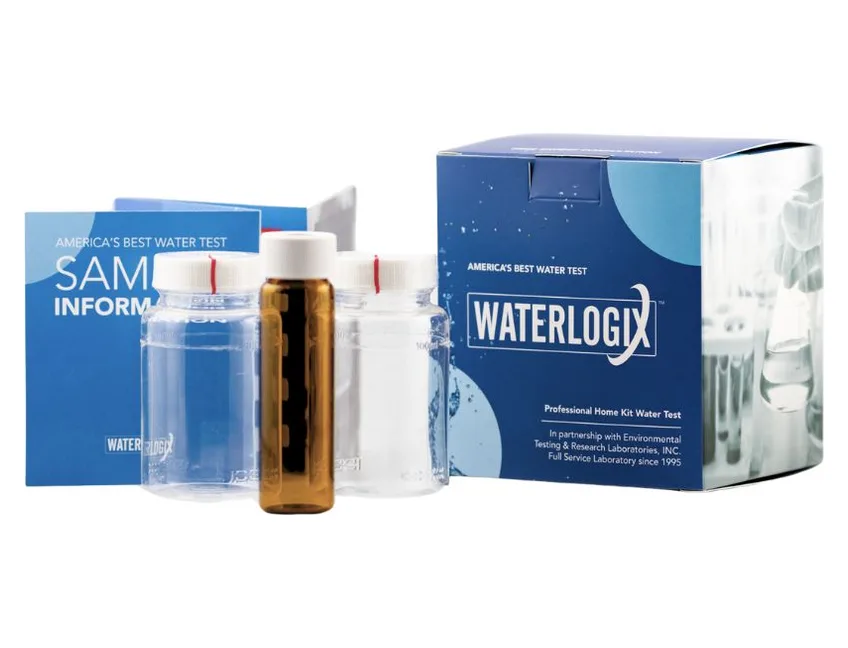
Waterlogix Advanced Well Water Test
US Water Systems (Waterlogix)
Manufacturer states: 56 well water contaminants by lab analysis, including coliform bacteria, nitrate, arsenic, lead and hardness, plus an on-site kit for iron-related and sulfate-reducing bacteria and hydrogen sulfide
- Analyzed by A lab the product page does not name · Manufacturer states: certified. The kit box says “in partnership with Environmental Testing & Research Laboratories, Inc.” We have not seen any certificate for this lab.
- Manufacturer states: Turnaround: 3–5 business days after the lab receives it
What it can't tell you: US Water Systems’ product page names no lab. Its kit box says “in partnership with Environmental Testing & Research Laboratories, Inc.”, and we have not seen any certificate for that lab or this test. US Water Systems says most customers get results and a treatment plan within about two weeks of ordering (one reviewer says about 2 weeks), and that plan comes from a company that sells treatment systems. It does not list PFAS. One sample shows one tap on one day.
Screening: quick check, not lab-grade

Watersafe Drinking Water Test Kit
Silver Lake Research
Lead, bacteria, nitrate, copper, iron, chlorine, hardness and pH
- Turnaround: Minutes; the bacteria test can take up to 48 hours
What it can't tell you: Each test gives a yes/no or a rough range, not a lab number, and it cannot detect PFAS or arsenic.
When your results arrive, read them here → · Compare every kit we list
A mail-in kit’s lab is accredited (ISO/IEC 17025) but may not be certified by your state. For a home sale, a loan, or a health-department follow-up, use a state-certified lab.
Your state health or environmental agency may also publish local well-water guidance.