Illinois well water by county: arsenic and nitrate
Modelled arsenic and nitrate for private-well users in every Illinois county, what to test for, and where to find a certified lab. Private wells aren’t covered by the Safe Drinking Water Act.
All 102 counties
- Lake CountyWell users 77,800Arsenic about 6 in 100Nitrate 0.0 mg/L
- Will CountyWell users 69,700Arsenic about 13 in 100Nitrate 0.0 mg/L
- DuPage CountyWell users 63,800Arsenic about 5 in 100Nitrate 0.0 mg/L
- Cook CountyWell users 63,400Arsenic about 4 in 100Nitrate 0.0 mg/L
- McHenry CountyWell users 55,900Arsenic about 10 in 100Nitrate 0.1 mg/L
- Winnebago CountyWell users 50,800Arsenic about 5 in 100Nitrate 0.6 mg/L
- Kane CountyWell users 44,000Arsenic about 15 in 100Nitrate 0.0 mg/L
- Kankakee CountyWell users 25,500Arsenic about 11 in 100Nitrate 0.1 mg/L
- LaSalle CountyWell users 22,900Arsenic about 12 in 100Nitrate 0.0 mg/L
- Ogle CountyWell users 20,600Arsenic about 6 in 100Nitrate 0.4 mg/L
- Peoria CountyWell users 19,800Arsenic about 15 in 100Nitrate 0.8 mg/L
- Whiteside CountyWell users 19,800Arsenic about 5 in 100Nitrate 0.5 mg/L
- Tazewell CountyWell users 18,800Arsenic about 21 in 100Nitrate 0.4 mg/L
- McLean CountyWell users 17,200Arsenic about 42 in 100Nitrate 0.1 mg/L
- DeKalb CountyWell users 17,200Arsenic about 12 in 100Nitrate 0.0 mg/L
- Kendall CountyWell users 16,900Arsenic about 9 in 100Nitrate 0.0 mg/L
- Rock Island CountyWell users 16,600Arsenic about 8 in 100Nitrate 0.3 mg/L
- Macon CountyWell users 16,400Arsenic about 57 in 100Nitrate 0.2 mg/L
- Sangamon CountyWell users 16,000Arsenic about 15 in 100Nitrate 1.5 mg/L
- Madison CountyWell users 15,900Arsenic about 4 in 100Nitrate 1.7 mg/L
- Champaign CountyWell users 15,700Arsenic about 28 in 100Nitrate 0.0 mg/L
- St. Clair CountyWell users 15,200Arsenic about 10 in 100Nitrate 0.8 mg/L
- Stephenson CountyWell users 13,300Arsenic about 3 in 100Nitrate 0.9 mg/L
- Vermilion CountyWell users 13,000Arsenic about 17 in 100Nitrate 0.1 mg/L
- Boone CountyWell users 12,600Arsenic about 5 in 100Nitrate 0.5 mg/L
- Woodford CountyWell users 12,300Arsenic about 35 in 100Nitrate 0.1 mg/L
- Lee CountyWell users 11,500Arsenic about 9 in 100Nitrate 0.1 mg/L
- Henry CountyWell users 10,800Arsenic about 13 in 100Nitrate 0.3 mg/L
- Grundy CountyWell users 10,700Arsenic about 9 in 100Nitrate 0.0 mg/L
- Adams CountyWell users 10,600Arsenic about 3 in 100Nitrate 0.4 mg/L
- Iroquois CountyWell users 9,600Arsenic about 13 in 100Nitrate 0.0 mg/L
- Fayette CountyWell users 9,100Arsenic about 6 in 100Nitrate 1.4 mg/L
- Effingham CountyWell users 9,000Arsenic about 3 in 100Nitrate 0.7 mg/L
- Monroe CountyWell users 9,000Arsenic about 3 in 100Nitrate 0.1 mg/L
- Livingston CountyWell users 8,700Arsenic about 7 in 100Nitrate 0.1 mg/L
- Clinton CountyWell users 8,600Arsenic about 6 in 100Nitrate 1.1 mg/L
- Bureau CountyWell users 8,300Arsenic about 12 in 100Nitrate 0.2 mg/L
- Fulton CountyWell users 8,200Arsenic about 12 in 100Nitrate 0.5 mg/L
- Jo Daviess CountyWell users 8,000Arsenic about 12 in 100Nitrate 0.8 mg/L
- Montgomery CountyWell users 8,000Arsenic about 7 in 100Nitrate 1.2 mg/L
- Shelby CountyWell users 8,000Arsenic about 33 in 100Nitrate 1.0 mg/L
- Knox CountyWell users 7,600Arsenic about 9 in 100Nitrate 0.2 mg/L
- Randolph CountyWell users 7,500Arsenic about 5 in 100Nitrate 0.7 mg/L
- Macoupin CountyWell users 7,400Arsenic about 14 in 100Nitrate 1.0 mg/L
- Logan CountyWell users 7,300Arsenic about 46 in 100Nitrate 0.8 mg/L
- Hancock CountyWell users 7,100Arsenic about 4 in 100Nitrate 0.2 mg/L
- Christian CountyWell users 7,000Arsenic about 12 in 100Nitrate 0.9 mg/L
- Morgan CountyWell users 6,600Arsenic about 21 in 100Nitrate 1.9 mg/L
- Bond CountyWell users 6,000Arsenic about 4 in 100Nitrate 1.2 mg/L
- Mason CountyWell users 5,900Arsenic about 14 in 100Nitrate 0.9 mg/L
- Mercer CountyWell users 5,900Arsenic about 11 in 100Nitrate 0.4 mg/L
- McDonough CountyWell users 5,800Arsenic about 16 in 100Nitrate 0.1 mg/L
- Carroll CountyWell users 5,800Arsenic about 6 in 100Nitrate 0.2 mg/L
- Clark CountyWell users 5,500Arsenic about 3 in 100Nitrate 0.4 mg/L
- Crawford CountyWell users 5,400Arsenic about 3 in 100Nitrate 1.2 mg/L
- Wayne CountyWell users 5,400Arsenic about 8 in 100Nitrate 0.1 mg/L
- Jefferson CountyWell users 5,400Arsenic about 7 in 100Nitrate 0.6 mg/L
- Edgar CountyWell users 5,300Arsenic about 39 in 100Nitrate 0.4 mg/L
- Warren CountyWell users 4,900Arsenic about 9 in 100Nitrate 0.3 mg/L
- Jasper CountyWell users 4,800Arsenic about 5 in 100Nitrate 0.4 mg/L
- Douglas CountyWell users 4,700Arsenic about 31 in 100Nitrate 0.0 mg/L
- Marion CountyWell users 4,500Arsenic about 7 in 100Nitrate 0.7 mg/L
- Richland CountyWell users 4,400Arsenic about 5 in 100Nitrate 0.1 mg/L
- Cumberland CountyWell users 4,400Arsenic about 6 in 100Nitrate 0.5 mg/L
- Clay CountyWell users 4,300Arsenic about 12 in 100Nitrate 0.2 mg/L
- Jackson CountyWell users 4,200Arsenic about 7 in 100Nitrate 0.2 mg/L
- De Witt CountyWell users 4,100Arsenic about 68 in 100Nitrate 0.1 mg/L
- Henderson CountyWell users 4,100Arsenic about 3 in 100Nitrate 1.1 mg/L
- Coles CountyWell users 4,100Arsenic about 20 in 100Nitrate 0.2 mg/L
- Marshall CountyWell users 4,100Arsenic about 25 in 100Nitrate 0.4 mg/L
- Lawrence CountyWell users 4,000Arsenic about 3 in 100Nitrate 0.5 mg/L
- Union CountyWell users 3,900Arsenic about 3 in 100Nitrate 0.1 mg/L
- Menard CountyWell users 3,800Arsenic about 23 in 100Nitrate 2.4 mg/L
- Greene CountyWell users 3,800Arsenic about 12 in 100Nitrate 1.5 mg/L
- Piatt CountyWell users 3,700Arsenic about 39 in 100Nitrate 0.0 mg/L
- Moultrie CountyWell users 3,600Arsenic about 34 in 100Nitrate 0.1 mg/L
- Massac CountyWell users 3,200Arsenic about 8 in 100Nitrate 0.2 mg/L
- Pike CountyWell users 3,200Arsenic about 4 in 100Nitrate 1.0 mg/L
- Wabash CountyWell users 2,800Arsenic about 3 in 100Nitrate 0.2 mg/L
- Cass CountyWell users 2,800Arsenic about 12 in 100Nitrate 1.1 mg/L
- Washington CountyWell users 2,700Arsenic about 9 in 100Nitrate 1.1 mg/L
- Ford CountyWell users 2,700Arsenic about 15 in 100Nitrate 0.0 mg/L
- White CountyWell users 2,600Arsenic about 7 in 100Nitrate 0.1 mg/L
- Hamilton CountyWell users 2,100Arsenic about 6 in 100Nitrate 0.0 mg/L
- Pulaski CountyWell users 2,100Arsenic about 6 in 100Nitrate 0.1 mg/L
- Stark CountyWell users 2,100Arsenic about 36 in 100Nitrate 0.3 mg/L
- Jersey CountyWell users 2,000Arsenic about 3 in 100Nitrate 1.2 mg/L
- Schuyler CountyWell users 1,900Arsenic about 8 in 100Nitrate 1.2 mg/L
- Alexander CountyWell users 1,900Arsenic about 4 in 100Nitrate 0.0 mg/L
- Calhoun CountyWell users 1,800Arsenic about 3 in 100Nitrate 0.3 mg/L
- Perry CountyWell users 1,800Arsenic about 7 in 100Nitrate 1.2 mg/L
- Putnam CountyWell users 1,800Arsenic about 14 in 100Nitrate 0.3 mg/L
- Scott CountyWell users 1,600Arsenic about 8 in 100Nitrate 2.0 mg/L
- Johnson CountyWell users 1,500Arsenic about 4 in 100Nitrate 0.1 mg/L
- Brown CountyWell users 1,300Arsenic about 4 in 100Nitrate 0.8 mg/L
- Franklin CountyWell users 1,200Arsenic about 4 in 100Nitrate 0.4 mg/L
- Hardin CountyWell users 1,200Arsenic about 4 in 100Nitrate 0.1 mg/L
- Williamson CountyWell users 990Arsenic about 4 in 100Nitrate 0.0 mg/L
- Pope CountyWell users 980Arsenic about 3 in 100Nitrate 0.1 mg/L
- Saline CountyWell users 950Arsenic about 8 in 100Nitrate 0.1 mg/L
- Edwards CountyWell users 920Arsenic about 12 in 100Nitrate 0.6 mg/L
- Gallatin CountyWell users 780Arsenic about 27 in 100Nitrate 0.1 mg/L
Each mark = 1 in 100 well users the model places above 10 µg/L arsenic (scale 0–10)10 mg/L nitrate: the federal limit (MCL) for public systems
- These figures describe the area, not your well. Only a lab test shows what’s in your water.
- CDC says the Well Water Index figures “do not describe risk to individual wells.” (CDC Tracking Network)
- The arsenic model is better at spotting low-arsenic areas than at confirming high ones.
- Well-user counts are 2010 USGS estimates; tract values are averages over each census tract.
- Total coliform bacteriaEvery year
- NitrateEvery year
- Total dissolved solidsEvery year
- pHEvery year
- ArsenicAsk your local health department
Order a mail-in lab test or a screening kit ↓
Got your results back? Read them →
EPA: Private Drinking Water Wells · CDC: Guidelines for Testing Well Water
Use a state-certified lab
Illinois Environmental Protection Agency lists the laboratories certified to test drinking water in Illinois.
What Illinois says
- What a new well is tested for
Illinois's health department recommends testing every new or repaired well to make sure the water is safe, and says a new water supply should be tested for nitrates.
Illinois Department of Public Health · Checked Nov 8, 2026
- What a new well is tested for
Under the Illinois Water Well Construction Code, when a new well is finished the contractor must give the owner state information on why sampling matters, how to sample, and how the water can be tested.
Illinois Department of Public Health (77 Ill. Adm. Code 920, Illinois Water Well Construction Code) · Checked Nov 8, 2026
- How often to test for arsenic
Illinois's health department recommends testing well water for arsenic, and further testing over time if the level is 5 ppb or more.
Illinois Department of Public Health · Checked Nov 8, 2026
- We found no statewide Illinois rule on testing a well when a home is sold (checked Nov 8, 2026). A county or town may have one: ask your local health department.
Rules can change. Check the linked page before you rely on it.
Screening tells you if something is worth a closer look
A lab result is the number you can act on.
As an Amazon Associate, PurityMap earns from qualifying purchases. Affiliate disclosure
Mail-in lab test
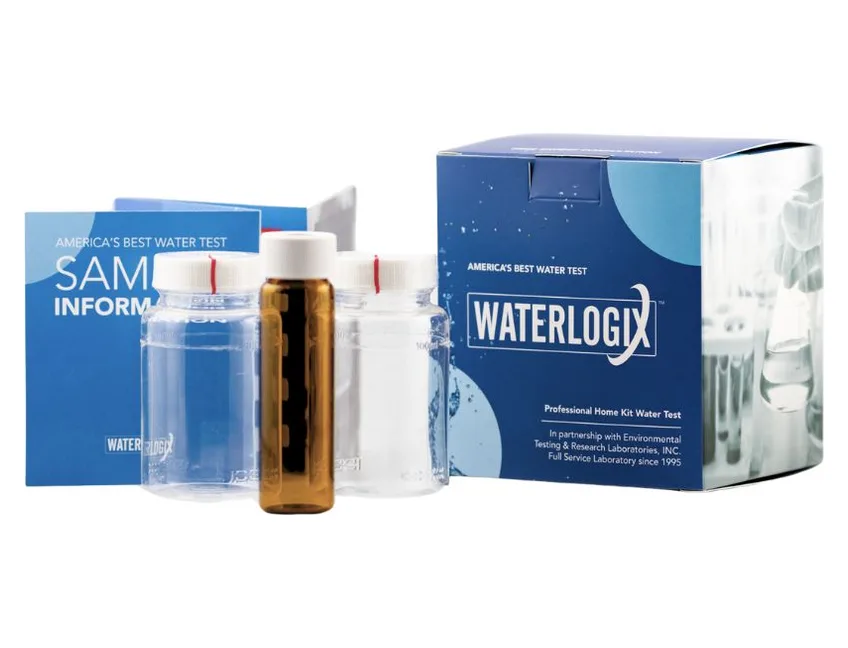
Waterlogix Advanced Well Water Test
US Water Systems (Waterlogix)
Manufacturer states: 56 well water contaminants by lab analysis, including coliform bacteria, nitrate, arsenic, lead and hardness, plus an on-site kit for iron-related and sulfate-reducing bacteria and hydrogen sulfide
- Analyzed by A lab the product page does not name · Manufacturer states: certified. The kit box says “in partnership with Environmental Testing & Research Laboratories, Inc.” We have not seen any certificate for this lab.
- Manufacturer states: Turnaround: 3–5 business days after the lab receives it
What it can't tell you: US Water Systems’ product page names no lab. Its kit box says “in partnership with Environmental Testing & Research Laboratories, Inc.”, and we have not seen any certificate for that lab or this test. US Water Systems says most customers get results and a treatment plan within about two weeks of ordering (one reviewer says about 2 weeks), and that plan comes from a company that sells treatment systems. It does not list PFAS. One sample shows one tap on one day.
Screening: quick check, not lab-grade

Watersafe Drinking Water Test Kit
Silver Lake Research
Lead, bacteria, nitrate, copper, iron, chlorine, hardness and pH
- Turnaround: Minutes; the bacteria test can take up to 48 hours
What it can't tell you: Each test gives a yes/no or a rough range, not a lab number, and it cannot detect PFAS or arsenic.
A mail-in kit’s lab is accredited (ISO/IEC 17025) but may not be certified by your state. For a home sale, a loan, or a health-department follow-up, use a state-certified lab.
Illinois well water
Sources: CDC Well Water Index (2024) · USGS arsenic and nitrate models · USGS domestic well populations · EPA and CDC testing guidance. Data last updated 2026-11-09. All sources →
How many people use private wells in Illinois?
About 1.1 million people across 102 Illinois counties, by the USGS 2010 estimate. USGS models place about 131,100 of them in areas where wells are likely to be above the 10 µg/L arsenic limit. These are area estimates, not well results.
Are private wells regulated in Illinois?
The quality and safety of drinking water from private domestic wells are not regulated by the Federal Government under the Safe Drinking Water Act nor by most state governments and laws. (EPA) Testing and treatment are the owner's responsibility.
Where can I get my well tested in Illinois?
Illinois Environmental Protection Agency keeps the list of laboratories certified to test drinking water in Illinois. Only use laboratories that are certified to do drinking water testing. (EPA)