City water report · 2026

Is Greensboro Tap Water Safe to Drink?

Short answer: In the 2023–2025 records we hold for Greensboro, three PFAS, PFHxS, PFOA and PFOS, each had a sample above a 2024 EPA limit (not a violation: the limits are judged on a yearly average, due 2029). 4 more are detected with no federal limit, and everything else measured is within its reference or not detected. 13 substances were detected and 22 were tested and not detected. The water is from City of Greensboro, serving 319,588 residents.

  • Year 2026
  • Utility City of Greensboro
  • Coverage 35 records
  • Updated 2026-10-15
Water utility

Where Greensboro’s water comes from

Utility
City of Greensboro
Water system
GREENSBORO, CITY OF · NC0241010
Source water
Surface water
Disinfectant
Chloramine
Population served
319,588
Reporting period
Sampled 2023–2025
Monitoring coverage
35 records · 4 of 4 groups measured
Service lines
0 lead, 17 galvanized, 67,123 unknown material (EPA inventory, 2026Q2)
Listed match

EPA lists this system for the city. Your water bill or annual water quality report names your actual supplier. Source: EPA SDWIS 2026Q2.

Why this matters
  1. 1
    Source

    Surface water

  2. 2
    Treatment

    Treated and disinfected with chloramine.

  3. 3
    Distribution

    Mains, then your building’s service line.

  4. 4
    Your tap

    Plumbing inside the building is outside this record.

At a glance

Greensboro water in four numbers

Purity ScoreGREENSBORO, CITY OF · PWSID NC0241010
13Detected3 with a sample above a 2024 EPA limit
3With a sample above a 2024 EPA limitof 35 records
0Health-based violationslast 10 years · EPA SDWIS

Three PFAS, PFHxS, PFOA and PFOS, each had a sample above a 2024 EPA limit (not a violation: the limits are judged on a yearly average, due 2029); 4 more are detected with no federal limit, and everything else measured is within its reference or not detected.

What we found

13 detected results, by distance from their limit

Perfluorooctanesulfonic acid (PFOS)Above EPA's 2024 limit (one sample) · Federal MCL4.0 ng/L federal MCL (2024)35.6ng/L
① · Measured

35.6 ng/L, sampled 2023-07-18 to 2024-04-23. EPA UCMR 5.

② · Compared

4.0 ng/L federal MCL (2024): a legal limit. That limit is judged on a yearly average, and water systems have until 2029 to meet it, so a single sample is not a violation. EPA health goal (MCLG): 0.

③ · Meaning

One EPA sample measured 35.6 ng/L, above the 4 ng/L limit EPA set in 2024. That limit is judged on a yearly average, and water systems have until 2029 to meet it, so a single sample is not a violation.

④ · Where it matters

Comes with the source water; home plumbing does not add it.

⑤ · What to do

Test your own tap first. To reduce it: Reverse osmosis, or carbon certified for PFAS (NSF/ANSI 53 or 58 (PFOA/PFOS)).

See the evidence record →
Perfluorohexanesulfonic acid (PFHxS)Above EPA's 2024 limit (one sample) · Federal MCL10 ng/L federal MCL (2024)16.8ng/L
① · Measured

16.8 ng/L, sampled 2023-07-18 to 2024-04-23. EPA UCMR 5.

② · Compared

10 ng/L federal MCL (2024): a legal limit. That limit is judged on a yearly average, and water systems have until 2029 to meet it, so a single sample is not a violation.

③ · Meaning

One EPA sample measured 16.8 ng/L, above the 10 ng/L limit EPA set in 2024. That limit is judged on a yearly average, and water systems have until 2029 to meet it, so a single sample is not a violation.

④ · Where it matters

Comes with the source water; home plumbing does not add it.

⑤ · What to do

Test your own tap first. To reduce it: Reverse osmosis, or carbon certified for PFAS (NSF/ANSI 53 or 58, with PFHxS named on the listing).

See the evidence record →
Perfluorooctanoic acid (PFOA)Above EPA's 2024 limit (one sample) · Federal MCL4.0 ng/L federal MCL (2024)5.6ng/L
① · Measured

5.6 ng/L, sampled 2023-07-18 to 2024-04-23. EPA UCMR 5.

② · Compared

4.0 ng/L federal MCL (2024): a legal limit. That limit is judged on a yearly average, and water systems have until 2029 to meet it, so a single sample is not a violation. EPA health goal (MCLG): 0.

③ · Meaning

One EPA sample measured 5.6 ng/L, above the 4 ng/L limit EPA set in 2024. That limit is judged on a yearly average, and water systems have until 2029 to meet it, so a single sample is not a violation.

④ · Where it matters

Comes with the source water; home plumbing does not add it.

⑤ · What to do

Test your own tap first. To reduce it: Reverse osmosis, or carbon certified for PFAS (NSF/ANSI 53 or 58 (PFOA/PFOS)).

See the evidence record →
Haloacetic acids (HAA5)Within reference · Federal MCL60 ppb federal MCL42ppb
① · Measured

42 ppb, sampled 2025. Utility CCR.

② · Compared

60 ppb federal MCL: a legal limit.

③ · Meaning

42 ppb (below the 60 ppb federal limit).

④ · Where it matters

Forms in the pipes as the disinfectant reacts with natural organic matter.

⑤ · What to do

Test your own tap first. Technologies that can reduce it: Activated carbon, Reverse osmosis.

See the evidence record →
Total trihalomethanes (TTHM)Within reference · Federal MCL80 ppb federal MCL49ppb
① · Measured

49 ppb, sampled 2025. Utility CCR.

② · Compared

80 ppb federal MCL: a legal limit.

③ · Meaning

49 ppb (below the 80 ppb federal limit).

④ · Where it matters

Forms in the pipes as the disinfectant reacts with natural organic matter.

⑤ · What to do

Test your own tap first. Technologies that can reduce it: Activated carbon, Reverse osmosis.

See the evidence record →
CopperWithin reference · Action level1.3 mg/L (action level)0.18mg/L
① · Measured

0.18 mg/L, sampled 2025. Utility CCR.

② · Compared

1.3 mg/L (action level). EPA health goal (MCLG): 1.3 mg/L.

③ · Meaning

Copper: measured 0.18 mg/L, within the 1.3 mg/L (action level) federal limit.

④ · Where it matters

Usually from copper plumbing inside buildings, more where water sits in the pipes.

⑤ · What to do

Test your own tap first. Technologies that can reduce it: Reverse osmosis, Corrosion-control / pH adjustment, Flushing standing water before use.

See the evidence record →
FluorideWithin reference · Listed reference4.0 mg/L0.55mg/L
① · Measured

0.55 mg/L, sampled 2025. Utility CCR.

② · Compared

4.0 mg/L. EPA health goal (MCLG): 4.0 mg/L.

③ · Meaning

Fluoride: measured 0.55 mg/L, within the 4.0 mg/L federal limit.

④ · Where it matters

Where it enters is not in this record.

⑤ · What to do

Test your own tap first. Technologies that can reduce it: Reverse osmosis, Activated alumina / adsorptive media, Distillation.

See the evidence record →
Perfluorobutanesulfonic acid (PFBS)Within reference · Screening level2,000 ng/L EPA health advisory (screening, not a legal limit)5.3ng/L
① · Measured

5.3 ng/L, sampled 2023-07-18 to 2024-04-23. EPA UCMR 5.

② · Compared

2,000 ng/L EPA health advisory (screening, not a legal limit).

③ · Meaning

Detected at up to 5.3 ng/L (below the 2,000 ng/L EPA health advisory; a screening level, not a legal limit).

④ · Where it matters

Comes with the source water; home plumbing does not add it.

⑤ · What to do

Test your own tap first. To reduce it: Reverse osmosis, or carbon certified for PFAS (NSF/ANSI 53 or 58, with PFBS named on the listing).

See the evidence record →
Perfluorohexanoic acid (PFHxA)Within reference · State limit400,000 ng/L Michigan EGLE state MCL (strictest US state)10.4ng/L
① · Measured

10.4 ng/L, sampled 2023-07-18 to 2024-04-23. EPA UCMR 5.

② · Compared

400,000 ng/L Michigan EGLE state MCL (strictest US state): a state limit.

③ · Meaning

Detected at up to 10.4 ng/L (below the 400,000 ng/L historical comparison reference).

④ · Where it matters

Comes with the source water; home plumbing does not add it.

⑤ · What to do

Test your own tap first. To reduce it: Reverse osmosis, or carbon certified for PFAS (NSF/ANSI 53 or 58, with PFHxA named on the listing).

See the evidence record →
1H, 1H, 2H, 2H-perfluorooctane sulfonic acid (6:2 FTS)Detected · no limit · No federal limitNo federal or state limit; shown for transparency7.2ng/L
① · Measured

7.2 ng/L, sampled 2023-07-18 to 2024-04-23. EPA UCMR 5.

② · Compared

No federal limit is on record for it.

③ · Meaning

Detected at up to 7.2 ng/L. No federal or state limit exists for this substance; shown for transparency, not graded.

④ · Where it matters

Comes with the source water; home plumbing does not add it.

⑤ · What to do

Test your own tap first. To reduce it: Reverse osmosis, or carbon certified for PFAS (NSF/ANSI 53 or 58, with 6:2 FTS named on the listing).

See the evidence record →
Perfluorobutanoic acid (PFBA)Detected · no limit · No federal limitNo federal or state limit; shown for transparency10ng/L
① · Measured

10 ng/L, sampled 2023-07-18 to 2024-04-23. EPA UCMR 5.

② · Compared

No federal limit is on record for it.

③ · Meaning

Detected at up to 10 ng/L. No federal or state limit exists for this substance; shown for transparency, not graded.

④ · Where it matters

Comes with the source water; home plumbing does not add it.

⑤ · What to do

Test your own tap first. To reduce it: Reverse osmosis, or carbon certified for PFAS (NSF/ANSI 53 or 58, with PFBA named on the listing).

See the evidence record →
Perfluoroheptanoic acid (PFHpA)Detected · no limit · No federal limitNo federal or state limit; shown for transparency3.8ng/L
① · Measured

3.8 ng/L, sampled 2023-07-18 to 2024-04-23. EPA UCMR 5.

② · Compared

No federal limit is on record for it.

③ · Meaning

Detected at up to 3.8 ng/L. No federal or state limit exists for this substance; shown for transparency, not graded.

④ · Where it matters

Comes with the source water; home plumbing does not add it.

⑤ · What to do

Test your own tap first. To reduce it: Reverse osmosis, or carbon certified for PFAS (NSF/ANSI 53 or 58, with PFHpA named on the listing).

See the evidence record →
Perfluoropentanoic acid (PFPeA)Detected · no limit · No federal limitNo federal or state limit; shown for transparency9.7ng/L
① · Measured

9.7 ng/L, sampled 2023-07-18 to 2024-04-23. EPA UCMR 5.

② · Compared

No federal limit is on record for it.

③ · Meaning

Detected at up to 9.7 ng/L. No federal or state limit exists for this substance; shown for transparency, not graded.

④ · Where it matters

Comes with the source water; home plumbing does not add it.

⑤ · What to do

Test your own tap first. To reduce it: Reverse osmosis, or carbon certified for PFAS (NSF/ANSI 53 or 58, with PFPeA named on the listing).

See the evidence record →
22 others tested, none detectedshow
  • 11Cl-PF3OUdS
  • 8:2 FTS
  • 4:2 FTS
  • ADONA
  • 9Cl-PF3ONS
  • HFPO-DA (GenX)
  • Lead (90th percentile)
  • Lithium
  • NEtFOSAA
  • NMeFOSAA
  • NFDHA
  • PFEESA
  • PFMPA
  • PFMBA
  • PFDA
  • PFDoA
  • PFHpS
  • PFNA
  • PFPeS
  • PFTA
  • PFTrDA
  • PFUnA

GREENSBORO, CITY OF (EPA PWSID NC0241010) delivers surface water to 319,588 residents. This report reflects 29 individual PFAS result(s) from the source UCMR5 observations and the latest Lead & Copper Rule 90th-percentile result. The utility's 2025 CCR reports chloramine disinfection.

Track record

0health-based violations in the last 10 years

From EPA SDWIS. A clean violation history means no enforcement action was recorded; it does not cover contaminants without a limit.

Your household

Your tap can differ from the city record

The record describes water leaving treatment and samples across the system. Pipes, solder and fixtures inside a building can add lead the record can’t see, especially in older buildings with lead service lines.

Test your water
  1. City
    Treated water

    Measured in this report

  2. Mains
    Distribution network

    Sampled across the system

  3. Building
    Service line and plumbing

    Not in this record

  4. Tap
    Your glass

    Only a tap test measures it

Test first, then treat

Water testing in Greensboro, NC

  1. 01Test

    Know what comes from your tap, starting with a first-draw lead sample.

  2. 02Match

    Compare each result with its named reference in our test reader.

  3. 03Treat

    Choose a technology certified for what your test found.

How to get your water tested in Greensboro

Commercial

Test kits

Affiliate links

Screening tells you if something is worth a closer look; a lab result is the number you can act on.

As an Amazon Associate, PurityMap earns from qualifying purchases. PurityMap earns a commission from US Water Systems when you buy its lab test through our link. Affiliate disclosure.

  • Mail-in lab test

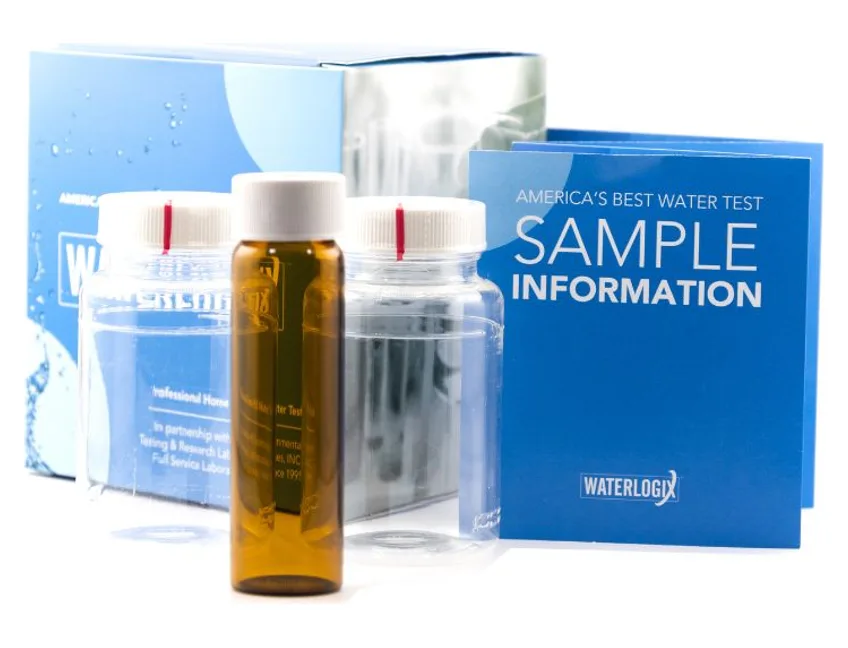
    Waterlogix Comprehensive City Water Test

    US Water Systems (Waterlogix)

    Manufacturer states: 113 city water contaminants at a lab, including lead, arsenic, nitrate, coliform bacteria, hardness, disinfection byproducts and volatile organic compounds

    • Analyzed by A lab the product page does not name · Manufacturer states: certified. The kit box says “in partnership with Environmental Testing & Research Laboratories, Inc.” We have not seen any certificate for this lab.
    • Manufacturer states: Turnaround: 3–5 business days after the lab receives it

    What it can't tell you: US Water Systems’ product page names no lab. Its kit box says “in partnership with Environmental Testing & Research Laboratories, Inc.”, and we have not seen any certificate for that lab or this test. US Water Systems says most customers get results and a treatment plan within about two weeks of ordering (one reviewer says about 2 weeks), and that plan comes from a company that sells treatment systems. It does not list PFAS. One sample shows one tap on one day.

  • Screening: quick check, not lab-grade

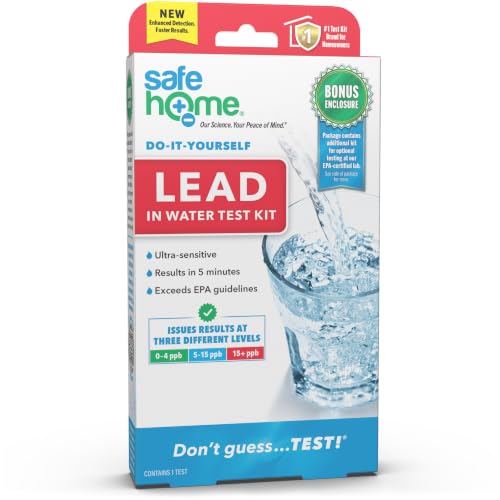
    Safe Home DIY Lead in Drinking Water Combo Test Kit

    Safe Home (EnviroTestKits)

    Lead, read as one of three ranges: 0–4, 5–15 or 15+ ppb

    • Turnaround: 5 minutes

    What it can't tell you: It shows a lead range, not an exact level, and tests nothing else unless you pay extra for the optional lab test.

When your results arrive, read them here → · Compare every kit we list

What lab tests cost →

Treatment matching

What can reduce what was found here

FindingReference typeTechnologyCertification to check
Perfluorooctanesulfonic acid (PFOS)35.6 ng/LFederal MCLReverse osmosis, or carbon certified for PFASNSF/ANSI 53 or 58 (PFOA/PFOS)
Perfluorohexanesulfonic acid (PFHxS)16.8 ng/LFederal MCLReverse osmosis, or carbon certified for PFASNSF/ANSI 53 or 58, with PFHxS named on the listing
Perfluorooctanoic acid (PFOA)5.6 ng/LFederal MCLReverse osmosis, or carbon certified for PFASNSF/ANSI 53 or 58 (PFOA/PFOS)
Haloacetic acids (HAA5)42 ppbFederal MCLActivated carbon, Reverse osmosisCheck the certifier’s listing
Total trihalomethanes (TTHM)49 ppbFederal MCLActivated carbon, Reverse osmosisCheck the certifier’s listing
Copper0.18 mg/LAction levelReverse osmosis, Corrosion-control / pH adjustment, Flushing standing water before useCheck the certifier’s listing
Fluoride0.55 mg/LListed referenceReverse osmosis, Activated alumina / adsorptive media, DistillationCheck the certifier’s listing
Perfluorobutanesulfonic acid (PFBS)5.3 ng/LScreening levelReverse osmosis, or carbon certified for PFASNSF/ANSI 53 or 58, with PFBS named on the listing
Galvanized service lines17 galvanized on record (EPA inventory, 2026Q2)Not a tap measurementLead-certified carbon filter, or reverse osmosisNSF/ANSI 53 (lead)

Understand water treatment technologies →

Commercial

Filters for the PFAS found in Greensboro water

Affiliate links

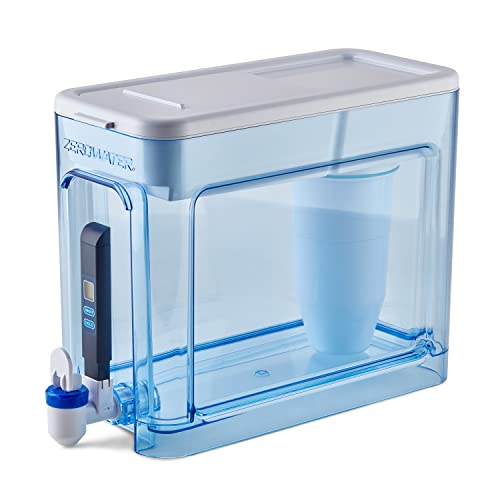
★ Best choice: ZeroWater 32-Cup Water Filter Dispenser (ZD-032-RR), certified for PFOA, PFOS and lead.

Filters for the PFAS found in Greensboro water
PickProductDetails and priceCertificationWhy it’s listedLink
★ Best choiceCountertopZeroWater 32-Cup Water Filter Dispenser (ZD-032-RR)ZeroWater (Zero Technologies)TreatsPFOA, PFOS and leadPrice$Certified for PFOA and PFOS (NSF/ANSI 53, IAPMO)Why it’s listed: its current certification names PFOA and PFOS, found in Greensboro’s record.See the evidenceCheck price on AmazonReplacement filters: ZeroWater ZR-017 (2 filters)
Also goodCountertopAquaTru Carafe Countertop Reverse-Osmosis Purifier (AT100)AquaTruTreatsPFOA, PFOS and leadPrice$$$Certified for PFOA and PFOS (NSF/ANSI 53, IAPMO)Why it’s listed: its current certification names PFOA and PFOS, found in Greensboro’s record.See the evidenceCheck price on AmazonReplacement filters: AquaTru AquaTru Carafe combo pack (pre-filters only: 1 pre/carbon, 1 VOC; the RO filter is a separate part)
Also goodCountertopAquaTru Classic Countertop Reverse-Osmosis Purifier (AT2000)AquaTruTreatsPFOA, PFOS and leadPrice$$$Certified for PFOA and PFOS (NSF/ANSI 53, IAPMO)Why it’s listed: its current certification names PFOA and PFOS, found in Greensboro’s record.See the evidenceCheck price on AmazonReplacement filters: AquaTru AquaTru Classic filter pack (full set: 2 pre/carbon, 1 VOC, 1 RO filter)
See all 8 drinking-water options for PFAS
More drinking-water options for PFAS
PickProductDetails and priceCertificationWhy it’s listedLink
Also goodUnder-sinkAquasana Claryum 2-Stage Under-Sink Filter (AQ-5200)AquasanaTreatsPFOA, PFOS and leadPrice$$Certified for PFOA and PFOS (NSF/ANSI 53, WQA)Why it’s listed: its current certification names PFOA and PFOS, found in Greensboro’s record.See the evidenceCheck price on AmazonReplacement filters: Aquasana AQ-5200R (2-stage cartridge set)
Also goodUnder-sinkAquasana Claryum 3-Stage Max Flow Under-Sink Filter (AQ-6300M)AquasanaTreatsPFOA, PFOS and leadPrice$$Certified for PFOA and PFOS (NSF/ANSI 53, WQA)Why it’s listed: its current certification names PFOA and PFOS, found in Greensboro’s record.See the evidenceCheck price on AmazonReplacement filters: Aquasana AQ-5300+R (3-stage cartridge set)
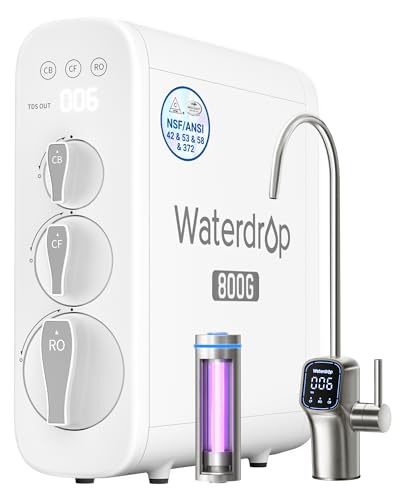
Also goodUnder-sinkWaterdrop G3P600 Tankless Reverse-Osmosis SystemWaterdropTreatsPFOA, PFOS and leadPrice$$$Certified for PFOA and PFOS (NSF/ANSI 53, IAPMO)Why it’s listed: its current certification names PFOA and PFOS, found in Greensboro’s record.See the evidenceCheck price on AmazonReplacement filters: Waterdrop G3-2CFCB (pre-filters only: 2 CF, 1 CB; the RO filter is a separate part)
Also goodUnder-sinkWaterdrop G3P800 Tankless Reverse-Osmosis SystemWaterdropTreatsPFOA, PFOS and leadPrice$$$Certified for PFOA and PFOS (NSF/ANSI 53, IAPMO)Why it’s listed: its current certification names PFOA and PFOS, found in Greensboro’s record.See the evidenceCheck price on AmazonReplacement filters: Waterdrop G3-2CFCB (pre-filters only: 2 CF, 1 CB; the RO filter is a separate part)
Also goodCountertopZeroWater 52-Cup Water Filter Dispenser (ZD-052-RR)ZeroWater (Zero Technologies)TreatsPFOA, PFOS and leadPrice$Certified for PFOA and PFOS (NSF/ANSI 53, IAPMO)Why it’s listed: its current certification names PFOA and PFOS, found in Greensboro’s record.See the evidenceCheck price on AmazonReplacement filters: ZeroWater ZR-017 (2 filters)

Also: lead picks →

PurityMap earns a commission from these links. "Best choice" and "Budget pick" go to certified products first; commission never decides them. As an Amazon Associate, PurityMap earns from qualifying purchases. Affiliate disclosure.

Lead service lines

Ask your utility first

City of Greensboro reported 17 galvanized service lines to replace in EPA’s inventory (2026Q2). Many utilities replace these lines for free or share the cost. Ask City of Greensboro whether your home’s line is on its list before you pay anyone.

Is this right for my home?

Choose your situation

Your situation
Your path: I live in an older buildingLead from plumbing is the main question

Older buildings may have lead service lines, solder or fixtures. Greensboro’s utility reported 17 galvanized service lines in EPA’s inventory. Test first-draw water, then filter if needed.

Look forLead reduction: NSF/ANSI 53 (lead)
How to test your tap →
Your path: I care about PFASCheck what was tested

9 of 29 PFAS tested were detected in Greensboro’s record (PFOS 35.6 ng/L, PFHxS 16.8 ng/L and PFOA 5.6 ng/L, and more); 3 above their limit. If PFAS matters to you, a filter certification names each compound it covers.

Look forNSF/ANSI 53 or 58, with each compound you care about named on the listing
PFAS in Greensboro →
Your path: My water tastes of chlorineGreensboro’s system disinfects with chloramine

Utilities keep a disinfectant in the pipes on the way to your tap. A carbon filter certified for chloramine reduces the taste.

Look forNSF/ANSI 42 (chloramine)
Water treatment technologies →
Your path: I have scale or hard waterHardness is not in this record

Your utility’s annual water quality report usually lists hardness; a test strip also measures it.

Look forSoftener: NSF/ANSI 44 (softeners)
Hard water explained →
Your path: I want the broadest reductionReverse osmosis at one tap

Reverse osmosis reduces many dissolved contaminants, including lead and minerals, at a single faucet, with some water sent to drain.

Look forNSF/ANSI 58
Compare treatments →
Questions

Greensboro tap water FAQ

Greensboro water alerts

Get an alert when Greensboro’s record changes.

Double opt-in: we email a confirmation link. You'll also get a short welcome series and the PurityMap digest. Unsubscribe anytime.

Is Greensboro tap water safe to drink?

PurityMap does not give a safe/unsafe verdict; it shows what the public records measured. For Greensboro, PFOS 35.6 ng/L (limit 4 ng/L), PFHxS 16.8 ng/L (limit 10 ng/L) and PFOA 5.6 ng/L (limit 4 ng/L) were measured in one EPA sample each, above the limits EPA set in 2024 (not a violation: the limits are judged on a yearly average, due 2029). GREENSBORO, CITY OF (PWSID NC0241010) has a Purity Score of 62/100 (confidence: high), assessed at the water-system level and computed only from contaminants that were measured. Water can change in your own pipes, so a certified test is the only way to know what comes out of your tap. What we found →

Who provides tap water in Greensboro?

GREENSBORO, CITY OF (PWS ID NC0241010) is the public water system on record for Greensboro, North Carolina, serving about 319,588 people. Confirm the utility on your water bill before acting on a specific finding. Water utility →

Where does Greensboro get its drinking water?

Surface water (primary source of record in EPA SDWIS). Water utility →

Are PFAS "forever chemicals" in Greensboro's water?

Yes. In EPA's UCMR 5 testing (2023-07-18 to 2024-04-23), PFOS was measured at 35.6 ng/L in one EPA sample, above the 4 ng/L limit EPA set in 2024, PFHxS was measured at 16.8 ng/L in one EPA sample, above the 10 ng/L limit EPA set in 2024 and PFOA was measured at 5.6 ng/L in one EPA sample, above the 4 ng/L limit EPA set in 2024. EPA's 2024 limits are judged on a yearly average, and water systems have until 2029 to meet them, so a single sample is not a violation. PFBS (5.3 ng/L, below the 2,000 ng/L EPA health advisory) and PFHxA (10.4 ng/L, below the 400,000 ng/L state limit) were also detected. 6:2 FTS (7.2 ng/L), PFBA (10 ng/L), PFHpA (3.8 ng/L) and PFPeA (9.7 ng/L) were also detected; they have no federal or state limit. Reverse osmosis and filters certified to NSF/ANSI 53 for PFOA/PFOS reduce them at the tap. PFAS in Greensboro water →

Is there lead in Greensboro's tap water?

Lead is not in Greensboro's current published record. Lead usually enters from a building's own pipes and fixtures, so a certified home test is the way to know yours. Your household →

What does the latest Greensboro water report show?

PurityMap's current record for Greensboro holds 35 findings: 3 above a reference, 6 detected within the reference, 4 detected with no limit and 22 not detected. Each finding links to its dated public record; a parameter that was never monitored is shown as pending, not as a pass. Records →

Where can I get my water tested in Greensboro?

For a lab result, use a lab certified for drinking water: in North Carolina, the North Carolina State Laboratory of Public Health certifies those labs and publishes the list. Ask the lab for the tests you need, such as a first-draw lead sample. A private well is not covered by the city record; PurityMap's Guilford County private-well page covers well water there. GREENSBORO, CITY OF's annual water quality report shows what the system measured; only a test of your own tap shows what comes out of it. Water testing in Greensboro →

Why does Greensboro tap water taste or smell like chlorine?

GREENSBORO, CITY OF disinfects with chloramine, according to the record. Utilities keep a disinfectant in the pipes on the way to your tap, and some people notice its taste or smell. It is allowed up to a federal limit of 4 mg/L; this record holds no measured level of it. A carbon filter certified to NSF/ANSI 42 for chloramine reduces the taste and smell. Choose your situation →

Data and sources

35 records, each traceable

  • EPA UCMR 5
  • EPA SDWIS (Lead & Copper Rule)
  • Utility CCR
ContaminantMeasuredReferenceSampledSource
Perfluorooctanesulfonic acid (PFOS)35.6 ng/L4.0 ng/L federal MCL (2024)2023–2024EPA UCMR 5 ↗ (opens in a new tab)
Perfluorohexanesulfonic acid (PFHxS)16.8 ng/L10 ng/L federal MCL (2024)2023–2024EPA UCMR 5 ↗ (opens in a new tab)
Perfluorooctanoic acid (PFOA)5.6 ng/L4.0 ng/L federal MCL (2024)2023–2024EPA UCMR 5 ↗ (opens in a new tab)
Haloacetic acids (HAA5)42 ppb60 ppb federal MCL2025Utility CCR ↗ (opens in a new tab)
Total trihalomethanes (TTHM)49 ppb80 ppb federal MCL2025Utility CCR ↗ (opens in a new tab)
Copper0.18 mg/L1.3 mg/L (action level)2025Utility CCR ↗ (opens in a new tab)
Fluoride0.55 mg/L4.0 mg/L2025Utility CCR ↗ (opens in a new tab)
Perfluorobutanesulfonic acid (PFBS)5.3 ng/L2,000 ng/L EPA health advisory (screening, not a legal limit)2023–2024EPA UCMR 5 ↗ (opens in a new tab)
Perfluorohexanoic acid (PFHxA)10.4 ng/L400,000 ng/L Michigan EGLE state MCL (strictest US state)2023–2024EPA UCMR 5 ↗ (opens in a new tab)
1H, 1H, 2H, 2H-perfluorooctane sulfonic acid (6:2 FTS)7.2 ng/LNo federal or state limit; shown for transparency2023–2024EPA UCMR 5 ↗ (opens in a new tab)
Perfluorobutanoic acid (PFBA)10 ng/LNo federal or state limit; shown for transparency2023–2024EPA UCMR 5 ↗ (opens in a new tab)
Perfluoroheptanoic acid (PFHpA)3.8 ng/LNo federal or state limit; shown for transparency2023–2024EPA UCMR 5 ↗ (opens in a new tab)
Perfluoropentanoic acid (PFPeA)9.7 ng/LNo federal or state limit; shown for transparency2023–2024EPA UCMR 5 ↗ (opens in a new tab)
11-Chloroeicosafluoro-3-oxaundecane-1-sulfonic acid (11Cl-PF3OUdS)< 5 ng/L (not detected)No federal or state limit; shown for transparency2023–2024EPA UCMR 5 ↗ (opens in a new tab)
1H, 1H, 2H, 2H-perfluorodecane sulfonic acid (8:2 FTS)< 5 ng/L (not detected)No federal or state limit; shown for transparency2023–2024EPA UCMR 5 ↗ (opens in a new tab)
1H, 1H, 2H, 2H-perfluorohexane sulfonic acid (4:2 FTS)< 3 ng/L (not detected)No federal or state limit; shown for transparency2023–2024EPA UCMR 5 ↗ (opens in a new tab)
4,8-Dioxa-3H-perfluorononanoic acid (ADONA)< 3 ng/L (not detected)No federal or state limit; shown for transparency2023–2024EPA UCMR 5 ↗ (opens in a new tab)
9-Chlorohexadecafluoro-3-oxanone-1-sulfonic acid (9Cl-PF3ONS)< 2 ng/L (not detected)No federal or state limit; shown for transparency2023–2024EPA UCMR 5 ↗ (opens in a new tab)
Hexafluoropropylene oxide dimer acid (HFPO-DA) (GenX chemicals)< 5 ng/L (not detected)10 ng/L federal MCL (2024)2023–2024EPA UCMR 5 ↗ (opens in a new tab)
Lead (90th percentile)Not detected15 µg/L federal action level2023–2025EPA SDWIS (Lead & Copper Rule) ↗ (opens in a new tab)
Lithium< 9 µg/L (not detected)10 µg/L EPA health reference level (screening, not a legal limit)2023–2024EPA UCMR 5 ↗ (opens in a new tab)
N-ethyl perfluorooctanesulfonamidoacetic acid (NEtFOSAA)< 5 ng/L (not detected)No federal or state limit; shown for transparency2023–2024EPA UCMR 5 ↗ (opens in a new tab)
N-methyl perfluorooctanesulfonamidoacetic acid (NMeFOSAA)< 6 ng/L (not detected)No federal or state limit; shown for transparency2023–2024EPA UCMR 5 ↗ (opens in a new tab)
Nonafluoro-3,6-dioxaheptanoic acid (NFDHA)< 20 ng/L (not detected)No federal or state limit; shown for transparency2023–2024EPA UCMR 5 ↗ (opens in a new tab)
Perfluoro (2-ethoxyethane) sulfonic acid (PFEESA)< 3 ng/L (not detected)No federal or state limit; shown for transparency2023–2024EPA UCMR 5 ↗ (opens in a new tab)
Perfluoro-3-methoxypropanoic acid (PFMPA)< 4 ng/L (not detected)No federal or state limit; shown for transparency2023–2024EPA UCMR 5 ↗ (opens in a new tab)
Perfluoro-4-methoxybutanoic acid (PFMBA)< 3 ng/L (not detected)No federal or state limit; shown for transparency2023–2024EPA UCMR 5 ↗ (opens in a new tab)
Perfluorodecanoic acid (PFDA)< 3 ng/L (not detected)No federal or state limit; shown for transparency2023–2024EPA UCMR 5 ↗ (opens in a new tab)
Perfluorododecanoic acid (PFDoA)< 3 ng/L (not detected)No federal or state limit; shown for transparency2023–2024EPA UCMR 5 ↗ (opens in a new tab)
Perfluoroheptanesulfonic acid (PFHpS)< 3 ng/L (not detected)No federal or state limit; shown for transparency2023–2024EPA UCMR 5 ↗ (opens in a new tab)
Perfluorononanoic acid (PFNA)< 4 ng/L (not detected)10 ng/L federal MCL (2024)2023–2024EPA UCMR 5 ↗ (opens in a new tab)
Perfluoropentanesulfonic acid (PFPeS)< 4 ng/L (not detected)No federal or state limit; shown for transparency2023–2024EPA UCMR 5 ↗ (opens in a new tab)
Perfluorotetradecanoic acid (PFTA)< 8 ng/L (not detected)No federal or state limit; shown for transparency2023–2024EPA UCMR 5 ↗ (opens in a new tab)
Perfluorotridecanoic acid (PFTrDA)< 7 ng/L (not detected)No federal or state limit; shown for transparency2023–2024EPA UCMR 5 ↗ (opens in a new tab)
Perfluoroundecanoic acid (PFUnA)< 2 ng/L (not detected)No federal or state limit; shown for transparency2023–2024EPA UCMR 5 ↗ (opens in a new tab)
  • UCMR5 Analytical Results

    UCMR5 Analytical Results: GREENSBORO, CITY OF (NC0241010)

    US EPA

    Published
    2026-10-15
    Newest sample
    2024-04-23
    Findings here
    30
  • State SDWIS Compliance Record

    Lead & Copper Rule 90th-percentile: GREENSBORO, CITY OF (NC0241010)

    US EPA SDWIS

    Published
    2026-10-13
    Newest sample
    2025
    Findings here
    1
  • Consumer Confidence Report (CCR)

    City of Greensboro Water Resources 2025 Consumer Confidence Report (CCR)

    City of Greensboro Water Resources

    Published
    2025-01-01
    Newest sample
    2025
    Findings here
    4

Methodology: how we analyze water. Prepared with AI assistance and reviewed by the PurityMap Editorial Team before publication.

Methodology

How PurityMap reads Greensboro’s water

  1. 01Source data

    EPA SDWIS, EPA UCMR 5 and utility reports, each dated and linked.

  2. 02Normalize

    Units converted to one basis; a non-detect kept distinct from zero.

  3. 03Classify

    Each result tagged by reference type: MCL, action level, screening level or aesthetic.

  4. 04Compare to the named reference

    Every value sits against its own reference, never a blended one.

  5. 05Score

    Measured subjects summarised at the water-system level; an open health-based violation caps the score.

  6. 06Match treatment

    Treatment is matched to what was found; a product is called certified only when its current certification names it.

What the Purity Score means: a summary of this water system’s published record, capped while a health-based violation is open. It is not a test of any tap. GREENSBORO, CITY OF · PWSID NC0241010 · Purity Score 62/100 (Fair) · Confidence: high · Assessed at the water-system level
Full methodology →

Something off with your water's smell, color or taste?

Start with the hot-or-cold tap check. Where City of Greensboro reported something related, it's shown below.

ZIP codes in Greensboro

Show all 29 ZIP codesShow fewer

Look up water quality by ZIP code →