City water report · 2026

Is Los Angeles Tap Water Safe to Drink?

Short answer: In the 2021–2025 records we hold for Los Angeles, no listed result is above a legal limit, but a health-based violation is on record (EPA SDWIS). Also worth knowing: lithium sits above a screening level, and the water is hard. 9 substances were detected and 29 were tested and not detected. The water is from Los Angeles Department of Water and Power, serving 3,875,566 residents.

  • Year 2026
  • Utility Los Angeles Department of Water and Power
  • Coverage 38 records
  • Updated 2026-10-15
Water utility

Where Los Angeles’ water comes from

Utility
Los Angeles Department of Water and Power
Water system
LOS ANGELES-CITY, DEPT. OF WATER & POWER · CA1910067
Source water
Surface water
Disinfectant
Chloramine
Population served
3,875,566
Reporting period
Sampled 2021–2025
Monitoring coverage
38 records · 4 of 4 groups measured
Listed match

EPA lists this system for the city. Your water bill or annual water quality report names your actual supplier. Source: EPA SDWIS 2026Q2.

Also supplies: Culver City, West Hollywood, View Park-Windsor Hills

Why this matters
  1. 1
    Source

    Surface water

  2. 2
    Treatment

    Treated and disinfected with chloramine.

  3. 3
    Distribution

    Mains, then your building’s service line.

  4. 4
    Your tap

    Plumbing inside the building is outside this record.

At a glance

Los Angeles water in four numbers

Purity ScoreLOS ANGELES-CITY, DEPT. OF WATER & POWER · PWSID CA1910067
9Detected2 above a reference
2Above a referenceof 38 records
1Health-based violationslast 10 years · EPA SDWIS

No measured result is above a legal limit; lithium sits above a screening level, and the water is hard.

What we found

9 detected results, by distance from their limit

LithiumAbove screening · Screening level10 µg/L EPA health reference level (screening, not a legal limit)100µg/L
① · Measured

100 µg/L, sampled 2023-12-26 to 2024-09-11. EPA UCMR 5.

② · Compared

10 µg/L EPA health reference level (screening, not a legal limit).

③ · Meaning

Detected at up to 100 µg/L (above the 10 µg/L EPA health reference level; a screening level, not a legal limit).

④ · Where it matters

Where it enters is not in this record.

⑤ · What to do

Test your own tap first. To reduce it: Depends on the contaminant (The certifier's listing for each named contaminant).

See the evidence record →
Total trihalomethanes (TTHM)Within reference · Federal MCL80 ppb federal MCL33.8ppb
① · Measured

33.8 ppb, sampled 2025. Utility CCR.

② · Compared

80 ppb federal MCL: a legal limit.

③ · Meaning

33.8 ppb (below the 80 ppb federal limit).

④ · Where it matters

Forms in the pipes as the disinfectant reacts with natural organic matter.

⑤ · What to do

Test your own tap first. Technologies that can reduce it: Activated carbon, Reverse osmosis.

See the evidence record →
CopperWithin reference · Action level1.3 mg/L (action level)0.529mg/L
① · Measured

0.529 mg/L, sampled 2025. Utility CCR.

② · Compared

1.3 mg/L (action level). EPA health goal (MCLG): 1.3 mg/L.

③ · Meaning

Copper: measured 0.529 mg/L, within the 1.3 mg/L (action level) federal limit.

④ · Where it matters

Usually from copper plumbing inside buildings, more where water sits in the pipes.

⑤ · What to do

Test your own tap first. Technologies that can reduce it: Reverse osmosis, Corrosion-control / pH adjustment, Flushing standing water before use.

See the evidence record →
ArsenicWithin reference · Listed reference0.010 mg/L0.003mg/L
① · Measured

0.003 mg/L, sampled 2025. Utility CCR.

② · Compared

0.010 mg/L. EPA health goal (MCLG): 0.

③ · Meaning

Arsenic: measured 0.003 mg/L, within the 0.010 mg/L federal limit.

④ · Where it matters

Comes with the source water, often from natural deposits in rock and soil.

⑤ · What to do

Test your own tap first. Technologies that can reduce it: Reverse osmosis, Anion exchange, Activated alumina / adsorptive media.

See the evidence record →
Lead (90th percentile)Within reference · Action level15 µg/L federal action level3.9µg/L
① · Measured

3.9 µg/L, sampled 2021–2023 monitoring period. EPA SDWIS (Lead & Copper Rule).

② · Compared

15 µg/L federal action level. EPA health goal (MCLG): 0.

③ · Meaning

The 90th-percentile tap result was 3.9 µg/L (below the 15 µg/L action level).

④ · Where it matters

Usually from lead service lines, solder and fixtures inside buildings, after the water leaves treatment.

⑤ · What to do

Test your own tap first. To reduce it: Lead-certified carbon filter, or reverse osmosis (NSF/ANSI 53 (lead)).

See the evidence record →
Haloacetic acids (HAA5)Within reference · Federal MCL60 ppb federal MCL13.4ppb
① · Measured

13.4 ppb, sampled 2025. Utility CCR.

② · Compared

60 ppb federal MCL: a legal limit.

③ · Meaning

13.4 ppb (below the 60 ppb federal limit).

④ · Where it matters

Forms in the pipes as the disinfectant reacts with natural organic matter.

⑤ · What to do

Test your own tap first. Technologies that can reduce it: Activated carbon, Reverse osmosis.

See the evidence record →
FluorideWithin reference · Listed reference4.0 mg/L0.7mg/L
① · Measured

0.7 mg/L, sampled 2025. Utility CCR.

② · Compared

4.0 mg/L. EPA health goal (MCLG): 4.0 mg/L.

③ · Meaning

Fluoride: measured 0.7 mg/L, within the 4.0 mg/L federal limit.

④ · Where it matters

Where it enters is not in this record.

⑤ · What to do

Test your own tap first. Technologies that can reduce it: Reverse osmosis, Activated alumina / adsorptive media, Distillation.

See the evidence record →
NitrateWithin reference · Listed reference10 mg/L0.4mg/L
① · Measured

0.4 mg/L, sampled 2025. Utility CCR.

② · Compared

10 mg/L.

③ · Meaning

Nitrate: measured 0.4 mg/L, within the 10 mg/L federal limit.

④ · Where it matters

Comes with the source water, often from fertilizer, manure or septic systems.

⑤ · What to do

Test your own tap first. Technologies that can reduce it: Reverse osmosis, Anion exchange, Distillation.

See the evidence record →
Water hardnessAbove aesthetic · Aesthetic, no health limitAesthetic, no federal health limit8.2gpg
① · Measured

8.2 gpg, sampled 2025. Utility CCR.

② · Compared

Aesthetic, no federal health limit.

③ · Meaning

140 mg/L as CaCO3 (8.2 grains/gal), hard. Aesthetic (scale/appliances), not a health finding.

④ · Where it matters

Shows up as scale in kettles, water heaters and fixtures.

⑤ · What to do

Test your own tap first. To reduce it: Ion-exchange water softener (NSF/ANSI 44 (softeners)).

See the evidence record →
29 others tested, none detectedshow
  • 11Cl-PF3OUdS
  • 8:2 FTS
  • 4:2 FTS
  • 6:2 FTS
  • ADONA
  • 9Cl-PF3ONS
  • HFPO-DA (GenX)
  • NEtFOSAA
  • NMeFOSAA
  • NFDHA
  • PFEESA
  • PFMPA
  • PFMBA
  • PFBS
  • PFBA
  • PFDA
  • PFDoA
  • PFHpS
  • PFHpA
  • PFHxS
  • PFHxA
  • PFNA
  • PFOS
  • PFOA
  • PFPeS
  • PFPeA
  • PFTA
  • PFTrDA
  • PFUnA

LOS ANGELES-CITY, DEPT. OF WATER & POWER (EPA PWSID CA1910067) delivers surface water to 3,875,566 residents. This report reflects 29 individual PFAS result(s) from the source UCMR5 observations and the latest Lead & Copper Rule 90th-percentile result. The utility's 2025 CCR reports hard water and chloramine disinfection.

Track record

1health-based violation in the last 10 years

From EPA SDWIS. Counted once per contaminant per year, as in the Track record score.

Health-based violations, last 10 years

Every filing is listed; the Track record score counts at most one per contaminant per year.

Filings 2009–2018
  • Long Term 2 Enhanced Surface Water Treatment Rule

Resolved

  1. Long Term 2 Enhanced Surface Water Treatment RuleTT

    to Resolved

    EPA status: ResolvedSDWIS ID 9315006

Your household

Your tap can differ from the city record

The record describes water leaving treatment and samples across the system. Pipes, solder and fixtures inside a building can add lead the record can’t see, especially in older buildings with lead service lines.

Test your water
  1. City
    Treated water

    Measured in this report

  2. Mains
    Distribution network

    Sampled across the system

  3. Building
    Service line and plumbing

    Not in this record

  4. Tap
    Your glass

    Only a tap test measures it

Test first, then treat

Three steps from a record to your glass

  1. 01Test

    Know what comes from your tap, starting with a first-draw lead sample.

  2. 02Match

    Compare each result with its named reference in our test reader.

  3. 03Treat

    Choose a technology certified for what your test found.

Commercial

Test kits

Affiliate links

Screening tells you if something is worth a closer look; a lab result is the number you can act on.

As an Amazon Associate, PurityMap earns from qualifying purchases. Affiliate disclosure.

  • Lab-certified results

    ETR Labs Basic Water Quality Test Kit

    ETR Laboratories

    50+ substances, including lead, copper, arsenic, nitrate, hardness and coliform bacteria

    What it can't tell you: It does not test PFAS, and not every result on the panel falls under the lab's accredited scope.

  • Screening: quick check, not lab-grade

    Varify 17-in-1 Complete Water Test Kit

    Varify

    17 strip readings, including lead, chlorine, fluoride, iron and hardness, plus 2 coliform bacteria tests

    • Turnaround: About 1 minute; the bacteria test takes 48 hours

    What it can't tell you: Strip colors give rough ranges, not lab numbers, and it cannot detect PFAS or arsenic.

When your results arrive, read them here → · Compare every kit we list

Treatment matching

What can reduce what was found here

FindingReference typeTechnologyCertification to check
Lithium100 µg/LScreening levelDepends on the contaminantThe certifier's listing for each named contaminant
Total trihalomethanes (TTHM)33.8 ppbFederal MCLActivated carbon, Reverse osmosisCheck the certifier’s listing
Copper0.529 mg/LAction levelReverse osmosis, Corrosion-control / pH adjustment, Flushing standing water before useCheck the certifier’s listing
Arsenic0.003 mg/LListed referenceReverse osmosis, Anion exchange, Activated alumina / adsorptive mediaCheck the certifier’s listing
Lead (90th percentile)3.9 µg/LAction levelLead-certified carbon filter, or reverse osmosisNSF/ANSI 53 (lead)
Haloacetic acids (HAA5)13.4 ppbFederal MCLActivated carbon, Reverse osmosisCheck the certifier’s listing
Fluoride0.7 mg/LListed referenceReverse osmosis, Activated alumina / adsorptive media, DistillationCheck the certifier’s listing
Nitrate0.4 mg/LListed referenceReverse osmosis, Anion exchange, DistillationCheck the certifier’s listing

Understand water treatment technologies →

Commercial

Certified for a concern found here

Each card names which Los Angeles findings its current certification covers, and which it doesn't.

As an Amazon Associate, PurityMap earns from qualifying purchases. A product appears here only when a current certification record covers at least one identified concern; every concern stays listed. The retail offer is looked up afterwards and never changes which products appear or their order. Affiliate disclosure.

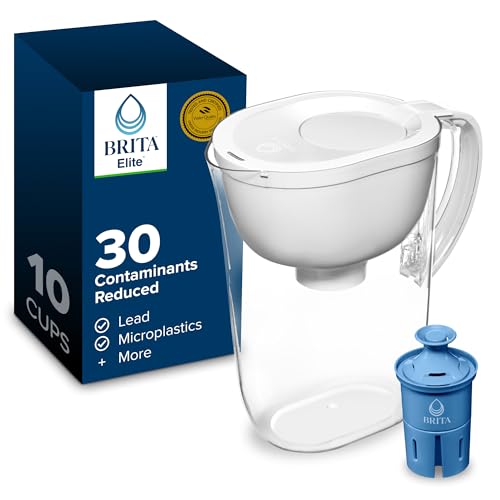
Brita Elite Water Filter Pitcher
Water Pitcher

Brita Elite Water Filter Pitcher

  • Lead: eligible, evidence match
  • Not established: Lithium, Hardness / scale
Not suitable for (3)
  • Treating every tap in the home
  • A whole-home hard-water or scale problem
  • All PFAS: its evidence covers only the compounds it names
Culligan ZeroWater 10-Cup Pitcher (ZEROP10)
Water Pitcher

Culligan ZeroWater 10-Cup Pitcher (ZEROP10)

  • Lead: eligible, evidence match
  • Not established: Lithium, Hardness / scale
Not suitable for (3)
  • Treating every tap in the home
  • A whole-home hard-water or scale problem
  • All PFAS: its evidence covers only the compounds it names
See all 15 products certified for a Los Angeles concern →
PUR Plus Faucet Filter (FM2500V)
Faucet Attachment

PUR Plus Faucet Filter (FM2500V)

  • Lead: eligible, evidence match
  • Not established: Lithium, Hardness / scale
Not suitable for (3)
  • Treating every tap in the home
  • A whole-home hard-water or scale problem
  • All PFAS: its evidence covers only the compounds it names
Aquasana Claryum 2-Stage Under-Sink Filter (AQ-5200)
Under-Sink Filter

Aquasana Claryum 2-Stage Under-Sink Filter (AQ-5200)

  • Lead: eligible, evidence match
  • Not established: Lithium, Hardness / scale
Not suitable for (5)
  • Treating every tap in the home
  • A whole-home hard-water or scale problem
  • All PFAS: its evidence covers only the compounds it names
  • Anyone who can't plumb, drill or hire an installer
  • Renters who can't modify plumbing
Aquasana Claryum 3-Stage Max Flow Under-Sink Filter (AQ-6300M)
Under-Sink Filter

Aquasana Claryum 3-Stage Max Flow Under-Sink Filter (AQ-6300M)

  • Lead: eligible, evidence match
  • Not established: Lithium, Hardness / scale
Not suitable for (5)
  • Treating every tap in the home
  • A whole-home hard-water or scale problem
  • All PFAS: its evidence covers only the compounds it names
  • Anyone who can't plumb, drill or hire an installer
  • Renters who can't modify plumbing
Aquasana Clean Water Machine Countertop Filter (AQ-CWM2)
Countertop System

Aquasana Clean Water Machine Countertop Filter (AQ-CWM2)

  • Lead: eligible, evidence match
  • Not established: Lithium, Hardness / scale
Not suitable for (3)
  • Treating every tap in the home
  • A whole-home hard-water or scale problem
  • All PFAS: its evidence covers only the compounds it names
Frizzlife SP99 Under-Sink Filter
Under-Sink Filter

Frizzlife SP99 Under-Sink Filter

  • Lead: eligible, evidence match
  • Not established: Lithium, Hardness / scale
Not suitable for (4)
  • Treating every tap in the home
  • A whole-home hard-water or scale problem
  • All PFAS: its evidence covers only the compounds it names
  • Anyone who can't plumb, drill or hire an installer
Patriot Pure Ultimate Water Filtration System
Countertop System

Patriot Pure Ultimate Water Filtration System

  • Lead: eligible, evidence match
  • Not established: Lithium, Hardness / scale
Not suitable for (3)
  • Treating every tap in the home
  • A whole-home hard-water or scale problem
  • All PFAS: its evidence covers only the compounds it names
AquaTru Carafe Countertop Reverse-Osmosis Purifier (AT100)
Countertop System

AquaTru Carafe Countertop Reverse-Osmosis Purifier (AT100)

  • Lead: eligible, evidence match
  • Not established: Lithium, Hardness / scale
Not suitable for (3)
  • Treating every tap in the home
  • A whole-home hard-water or scale problem
  • All PFAS: its evidence covers only the compounds it names
AquaTru Classic Countertop Reverse-Osmosis Purifier (AT2000)
Countertop System

AquaTru Classic Countertop Reverse-Osmosis Purifier (AT2000)

  • Lead: eligible, evidence match
  • Not established: Lithium, Hardness / scale
Not suitable for (3)
  • Treating every tap in the home
  • A whole-home hard-water or scale problem
  • All PFAS: its evidence covers only the compounds it names
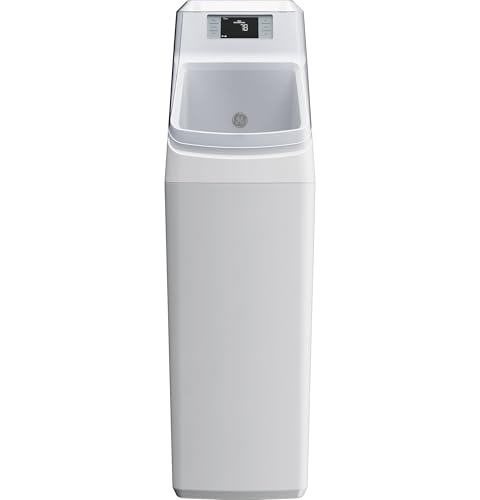
GE GXSH35W Water Softener (35,000-grain)
Whole-House System

GE GXSH35W Water Softener (35,000-grain)

  • Hardness / scale: eligible, evidence match
  • Not established: Lithium, Lead
Not suitable for (4)
  • Treating only the drinking-water tap
  • Lead from plumbing after the point it treats
  • Anyone who can't plumb, drill or hire an installer
  • Renters who can't modify plumbing
Kenmore 420 Water Softener (40,000-grain)
Whole-House System

Kenmore 420 Water Softener (40,000-grain)

  • Hardness / scale: eligible, evidence match
  • Not established: Lithium, Lead
Not suitable for (4)
  • Treating only the drinking-water tap
  • Lead from plumbing after the point it treats
  • Anyone who can't plumb, drill or hire an installer
  • Renters who can't modify plumbing
Waterdrop G3P600 Tankless Reverse-Osmosis System
Under-Sink Filter

Waterdrop G3P600 Tankless Reverse-Osmosis System

  • Lead: eligible, evidence match
  • Not established: Lithium, Hardness / scale
Not suitable for (5)
  • Treating every tap in the home
  • A whole-home hard-water or scale problem
  • All PFAS: its evidence covers only the compounds it names
  • Anyone who can't plumb, drill or hire an installer
  • Renters who can't modify plumbing
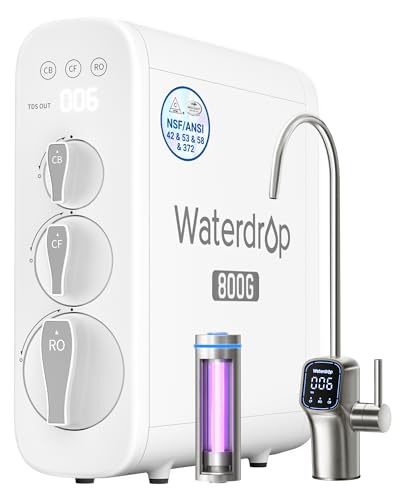
Waterdrop G3P800 Tankless Reverse-Osmosis System
Under-Sink Filter

Waterdrop G3P800 Tankless Reverse-Osmosis System

  • Lead: eligible, evidence match
  • Not established: Lithium, Hardness / scale
Not suitable for (5)
  • Treating every tap in the home
  • A whole-home hard-water or scale problem
  • All PFAS: its evidence covers only the compounds it names
  • Anyone who can't plumb, drill or hire an installer
  • Renters who can't modify plumbing
Whirlpool Filter 3 Refrigerator Water Filter (WHR3RXD1)
Refrigerator Filter

Whirlpool Filter 3 Refrigerator Water Filter (WHR3RXD1)

  • Lead: eligible, evidence match
  • Not established: Lithium, Hardness / scale
Not suitable for (3)
  • Treating every tap in the home
  • A whole-home hard-water or scale problem
  • All PFAS: its evidence covers only the compounds it names

Ask your utility first

Find out if your building has a lead service line

Water utilities keep an inventory of service-line materials. Ask Los Angeles Department of Water and Power whether your address is on it before you replace pipes.

Local help

Think your plumbing may be adding lead?

Call to be connected with a local plumbing provider about lead service lines, repiping or fixture replacement.

Is this right for my home?

Choose your situation

Your situation
Your path: I live in an older buildingLead from plumbing is the main question

Older buildings may have lead service lines, solder or fixtures. Los Angeles’ record shows lead at 3.9 µg/L (15 µg/L federal action level). Test first-draw water, then filter if needed.

Look forLead reduction: NSF/ANSI 53 (lead)
How to test your tap →
Your path: I care about PFASCheck what was tested

None of the 29 PFAS tested was detected in Los Angeles’ record. If PFAS matters to you, a filter certification names each compound it covers.

Look forNSF/ANSI 53 or 58, with each compound you care about named on the listing
PFAS in Los Angeles →
Your path: My water tastes of chlorineLos Angeles’ system disinfects with chloramine

Utilities keep a disinfectant in the pipes on the way to your tap. A carbon filter certified for chloramine reduces the taste.

Look forNSF/ANSI 42 (chloramine)
Water treatment technologies →
Your path: I have scale or hard waterLos Angeles water is hard (8.2 gpg)

Scale is a comfort and appliance issue, not a health one.

Look forSoftener: NSF/ANSI 44 (softeners)
Hard water in Los Angeles →
Your path: I want the broadest reductionReverse osmosis at one tap

Reverse osmosis reduces many dissolved contaminants, including lead and minerals, at a single faucet, with some water sent to drain.

Look forNSF/ANSI 58
Compare treatments →
Questions

Los Angeles tap water FAQ

Follow Los Angeles’ water

Get one email when Los Angeles’ record changes.

Follow Los Angeles’ water →
Is Los Angeles tap water safe to drink?

PurityMap does not give a safe/unsafe verdict; it shows what the public records measured. For Los Angeles, no regulated PFAS were detected in EPA's 2024 testing; the lead 90th-percentile result was 3.9 µg/L against the 15 µg/L action level. LOS ANGELES-CITY, DEPT. OF WATER & POWER (PWSID CA1910067) has a Purity Score of 90/100 (confidence: high), assessed at the water-system level and computed only from contaminants that were measured. Water can change in your own pipes, so a certified test is the only way to know what comes out of your tap. What we found →

Who provides tap water in Los Angeles?

LOS ANGELES-CITY, DEPT. OF WATER & POWER (PWS ID CA1910067) is the public water system on record for Los Angeles, California, serving about 3,875,566 people. Confirm the utility on your water bill before acting on a specific finding. Water utility →

Where does Los Angeles get its drinking water?

Surface water (primary source of record in EPA SDWIS). Water utility →

Are PFAS "forever chemicals" in Los Angeles's water?

None of the 29 PFAS in EPA's UCMR 5 testing (2023-12-26 to 2024-09-11) was detected. "Not detected" means below the lab's reporting limit, not proven zero. What we found →

Is there lead in Los Angeles's tap water?

LOS ANGELES-CITY, DEPT. OF WATER & POWER's most recent lead 90th-percentile result (2021–2023) was 3.9 µg/L, below the 15 µg/L action level. That figure comes from sampled homes; lead usually enters from a building's own pipes and fixtures, so only a test at your tap tells you what you drink. Your household →

What does the latest Los Angeles water report show?

PurityMap's current record for Los Angeles holds 38 findings: 2 above a reference, 7 detected within the reference and 29 not detected. Each finding links to its dated public record; a parameter that was never monitored is shown as pending, not as a pass. Records →

Is Los Angeles's water hard?

Los Angeles's water is recorded as 8.2 gpg, hard. Hardness is an aesthetic and plumbing characteristic, not a health-based limit. Choose your situation →

Data and sources

38 records, each traceable

  • EPA UCMR 5
  • EPA SDWIS (Lead & Copper Rule)
  • Utility CCR
ContaminantMeasuredReferenceSampledSource
Lithium100 µg/L10 µg/L EPA health reference level (screening, not a legal limit)2023–2024EPA UCMR 5 ↗ (opens in a new tab)
Water hardness8.2 gpgAesthetic, no federal health limit2025Utility CCR ↗ (opens in a new tab)
Total trihalomethanes (TTHM)33.8 ppb80 ppb federal MCL2025Utility CCR ↗ (opens in a new tab)
Copper0.529 mg/L1.3 mg/L (action level)2025Utility CCR ↗ (opens in a new tab)
Arsenic0.003 mg/L0.010 mg/L2025Utility CCR ↗ (opens in a new tab)
Lead (90th percentile)3.9 µg/L15 µg/L federal action level2021–2023EPA SDWIS (Lead & Copper Rule) ↗ (opens in a new tab)
Haloacetic acids (HAA5)13.4 ppb60 ppb federal MCL2025Utility CCR ↗ (opens in a new tab)
Fluoride0.7 mg/L4.0 mg/L2025Utility CCR ↗ (opens in a new tab)
Nitrate0.4 mg/L10 mg/L2025Utility CCR ↗ (opens in a new tab)
11-Chloroeicosafluoro-3-oxaundecane-1-sulfonic acid (11Cl-PF3OUdS)< 5 ng/L (not detected)No federal or state limit; shown for transparency2023–2024EPA UCMR 5 ↗ (opens in a new tab)
1H, 1H, 2H, 2H-perfluorodecane sulfonic acid (8:2 FTS)< 5 ng/L (not detected)No federal or state limit; shown for transparency2023–2024EPA UCMR 5 ↗ (opens in a new tab)
1H, 1H, 2H, 2H-perfluorohexane sulfonic acid (4:2 FTS)< 3 ng/L (not detected)No federal or state limit; shown for transparency2023–2024EPA UCMR 5 ↗ (opens in a new tab)
1H, 1H, 2H, 2H-perfluorooctane sulfonic acid (6:2 FTS)< 5 ng/L (not detected)No federal or state limit; shown for transparency2023–2024EPA UCMR 5 ↗ (opens in a new tab)
4,8-Dioxa-3H-perfluorononanoic acid (ADONA)< 3 ng/L (not detected)No federal or state limit; shown for transparency2023–2024EPA UCMR 5 ↗ (opens in a new tab)
9-Chlorohexadecafluoro-3-oxanone-1-sulfonic acid (9Cl-PF3ONS)< 2 ng/L (not detected)No federal or state limit; shown for transparency2023–2024EPA UCMR 5 ↗ (opens in a new tab)
Hexafluoropropylene oxide dimer acid (HFPO-DA) (GenX chemicals)< 5 ng/L (not detected)10 ng/L federal MCL (2024)2023–2024EPA UCMR 5 ↗ (opens in a new tab)
N-ethyl perfluorooctanesulfonamidoacetic acid (NEtFOSAA)< 5 ng/L (not detected)No federal or state limit; shown for transparency2023–2024EPA UCMR 5 ↗ (opens in a new tab)
N-methyl perfluorooctanesulfonamidoacetic acid (NMeFOSAA)< 6 ng/L (not detected)No federal or state limit; shown for transparency2023–2024EPA UCMR 5 ↗ (opens in a new tab)
Nonafluoro-3,6-dioxaheptanoic acid (NFDHA)< 20 ng/L (not detected)No federal or state limit; shown for transparency2023–2024EPA UCMR 5 ↗ (opens in a new tab)
Perfluoro (2-ethoxyethane) sulfonic acid (PFEESA)< 3 ng/L (not detected)No federal or state limit; shown for transparency2023–2024EPA UCMR 5 ↗ (opens in a new tab)
Perfluoro-3-methoxypropanoic acid (PFMPA)< 4 ng/L (not detected)No federal or state limit; shown for transparency2023–2024EPA UCMR 5 ↗ (opens in a new tab)
Perfluoro-4-methoxybutanoic acid (PFMBA)< 3 ng/L (not detected)No federal or state limit; shown for transparency2023–2024EPA UCMR 5 ↗ (opens in a new tab)
Perfluorobutanesulfonic acid (PFBS)< 3 ng/L (not detected)2,000 ng/L EPA health advisory (screening, not a legal limit)2023–2024EPA UCMR 5 ↗ (opens in a new tab)
Perfluorobutanoic acid (PFBA)< 5 ng/L (not detected)No federal or state limit; shown for transparency2023–2024EPA UCMR 5 ↗ (opens in a new tab)
Perfluorodecanoic acid (PFDA)< 3 ng/L (not detected)No federal or state limit; shown for transparency2023–2024EPA UCMR 5 ↗ (opens in a new tab)
Perfluorododecanoic acid (PFDoA)< 3 ng/L (not detected)No federal or state limit; shown for transparency2023–2024EPA UCMR 5 ↗ (opens in a new tab)
Perfluoroheptanesulfonic acid (PFHpS)< 3 ng/L (not detected)No federal or state limit; shown for transparency2023–2024EPA UCMR 5 ↗ (opens in a new tab)
Perfluoroheptanoic acid (PFHpA)< 3 ng/L (not detected)No federal or state limit; shown for transparency2023–2024EPA UCMR 5 ↗ (opens in a new tab)
Perfluorohexanesulfonic acid (PFHxS)< 3 ng/L (not detected)10 ng/L federal MCL (2024)2023–2024EPA UCMR 5 ↗ (opens in a new tab)
Perfluorohexanoic acid (PFHxA)< 3 ng/L (not detected)400,000 ng/L Michigan EGLE state MCL (strictest US state)2023–2024EPA UCMR 5 ↗ (opens in a new tab)
Perfluorononanoic acid (PFNA)< 4 ng/L (not detected)10 ng/L federal MCL (2024)2023–2024EPA UCMR 5 ↗ (opens in a new tab)
Perfluorooctanesulfonic acid (PFOS)< 4 ng/L (not detected)4.0 ng/L federal MCL (2024)2023–2024EPA UCMR 5 ↗ (opens in a new tab)
Perfluorooctanoic acid (PFOA)< 4 ng/L (not detected)4.0 ng/L federal MCL (2024)2023–2024EPA UCMR 5 ↗ (opens in a new tab)
Perfluoropentanesulfonic acid (PFPeS)< 4 ng/L (not detected)No federal or state limit; shown for transparency2023–2024EPA UCMR 5 ↗ (opens in a new tab)
Perfluoropentanoic acid (PFPeA)< 3 ng/L (not detected)No federal or state limit; shown for transparency2023–2024EPA UCMR 5 ↗ (opens in a new tab)
Perfluorotetradecanoic acid (PFTA)< 8 ng/L (not detected)No federal or state limit; shown for transparency2023–2024EPA UCMR 5 ↗ (opens in a new tab)
Perfluorotridecanoic acid (PFTrDA)< 7 ng/L (not detected)No federal or state limit; shown for transparency2023–2024EPA UCMR 5 ↗ (opens in a new tab)
Perfluoroundecanoic acid (PFUnA)< 2 ng/L (not detected)No federal or state limit; shown for transparency2023–2024EPA UCMR 5 ↗ (opens in a new tab)
  • UCMR5 Analytical Results

    UCMR5 Analytical Results: LOS ANGELES-CITY, DEPT. OF WATER & POWER (CA1910067)

    US EPA

    Published
    2026-10-15
    Newest sample
    2024-09-11
    Findings here
    30
  • State SDWIS Compliance Record

    Lead & Copper Rule 90th-percentile: LOS ANGELES-CITY, DEPT. OF WATER & POWER (CA1910067)

    US EPA SDWIS

    Published
    2026-10-13
    Newest sample
    2023
    Findings here
    1
  • Consumer Confidence Report (CCR)

    Los Angeles Dept. of Water & Power (LADWP) 2025 Consumer Confidence Report (CCR)

    Los Angeles Dept. of Water & Power (LADWP)

    Published
    2025-01-01
    Newest sample
    2025
    Findings here
    7

Methodology: how we analyze water. Prepared with AI assistance and reviewed by the PurityMap Editorial Team before publication.

Methodology

How PurityMap reads Los Angeles’ water

  1. 01Source data

    EPA SDWIS, EPA UCMR 5 and utility reports, each dated and linked.

  2. 02Normalize

    Units converted to one basis; a non-detect kept distinct from zero.

  3. 03Classify

    Each result tagged by reference type: MCL, action level, screening level or aesthetic.

  4. 04Compare to the named reference

    Every value sits against its own reference, never a blended one.

  5. 05Score

    Measured subjects summarised at the water-system level; an open health-based violation caps the score.

  6. 06Match treatment

    Treatment is matched to what was found; a product is called certified only when its current certification names it.

What the Purity Score means: a summary of this water system’s published record, capped while a health-based violation is open. It is not a test of any tap. LOS ANGELES-CITY, DEPT. OF WATER & POWER · PWSID CA1910067 · Purity Score 90/100 (Excellent) · Confidence: high · Assessed at the water-system level

Full methodology →

Something off with your water's smell, color or taste?

Start with the hot-or-cold tap check. Where Los Angeles Department of Water and Power reported something related, it's shown below.

ZIP codes in Los Angeles

Show all 95 ZIP codesShow fewer

Look up water quality by ZIP code →