PFOS
1.1× the limitPerfluorooctanesulfonic acid
4.2ng/L
Each block = 4.0 ng/L federal MCL (2024)
EPA UCMR 5 · sampled 2023Evidence
Short answer: Two PFAS, PFOA and PFOS, are above their federal limits (2024 limits that water systems have until at least 2029 to meet); lithium sits above a screening level. New Orleans Carrollton Water Works serves 334,903 residents.
Your water bill or annual water quality report names your actual supplier.
Each bar is drawn in blocks of the 4.0 ng/L federal MCL (2024), so the length shows how far above it the result sits.
4.2ng/L
Each block = 4.0 ng/L federal MCL (2024)
4.1ng/L
Each block = 4.0 ng/L federal MCL (2024)
NEW ORLEANS CARROLLTON WATER WORKS (EPA PWSID LA1071009) delivers surface water to 334,903 residents. This report reflects 29 individual PFAS result(s) from the source UCMR5 observations and the latest Lead & Copper Rule 90th-percentile result. Water hardness and disinfectant type are pending the utility's own annual report.
1health-based violation in the last 10 years
From EPA SDWIS. Counted once per contaminant per year, as in the Track record score.
No result is not a pass. Your utility's annual water quality report may list them, and a certified lab test covers your own tap.
Every filing is listed; the Track record score counts at most one per contaminant per year.
Resolved
to Resolved
Plumbing inside a home can add lead that the system record can't show. A tap test tells you what reaches your glass.
PFOS 4.2 ng/L, above the 4 ng/L limit (+5 more PFAS detected)
lead 6 µg/L, below the 15 µg/L action level (detected below the limit); 13,927 lead service lines; 49 galvanized lines to replace (context, not a tap measurement)
Screening tells you if something is worth a closer look; a lab result is the number you can act on.
As an Amazon Associate, PurityMap earns from qualifying purchases. Affiliate disclosure.
Screening: quick check, not lab-grade
Safe Home (EnviroTestKits)
Lead, read as one of three ranges: 0–4, 5–15 or 15+ ppb
What it can't tell you: It shows a lead range, not an exact level, and tests nothing else unless you pay extra for the optional lab test.
Lab-certified results
ETR Laboratories
50+ substances, including lead, copper, arsenic, nitrate, hardness and coliform bacteria
What it can't tell you: It does not test PFAS, and not every result on the panel falls under the lab's accredited scope.
Each card names which New Orleans findings its current certification covers, and which it doesn't.
As an Amazon Associate, PurityMap earns from qualifying purchases. A product appears here only when a current certification record covers at least one identified concern; every concern stays listed. The retail offer is looked up afterwards and never changes which products appear or their order. Affiliate disclosure.




PurityMap does not give a safe/unsafe verdict; it shows what the public records measured. For New Orleans, PFOS 4.2 ng/L and PFOA 4.1 ng/L were measured above the 4 ng/L federal limit in EPA's 2024 testing; the lead 90th-percentile result was 6 µg/L against the 15 µg/L action level. NEW ORLEANS CARROLLTON WATER WORKS (PWSID LA1071009) has a Purity Score of 68/100 (confidence: moderate), assessed at the water-system level and computed only from contaminants that were measured. Water can change in your own pipes, so a certified test is the only way to know what comes out of your tap.
NEW ORLEANS CARROLLTON WATER WORKS (PWS ID LA1071009) is the public water system on record for New Orleans, Louisiana, serving about 334,903 people. Confirm the utility on your water bill before acting on a specific finding.
Surface water (primary source of record in EPA SDWIS).
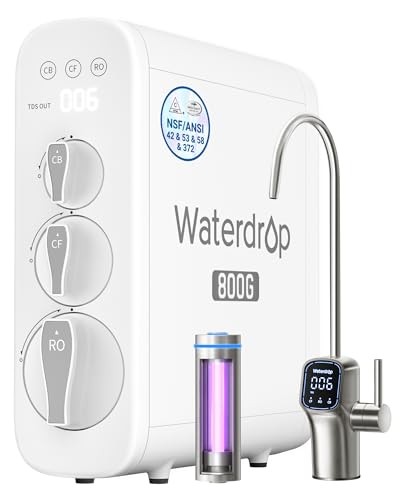
Yes. In EPA's UCMR 5 testing (2023-03-07 to 2025-03-11), PFOS was measured at 4.2 ng/L against a 4 ng/L federal limit and PFOA was measured at 4.1 ng/L against a 4 ng/L federal limit. HFPO-DA (GenX) (5.4 ng/L, below the 10 ng/L federal limit) and PFHxA (3 ng/L, below the 400,000 ng/L state limit) were also detected. PFBA (9.1 ng/L) and PFPeA (8.8 ng/L) were also detected; they have no federal or state limit. Reverse osmosis and filters certified to NSF/ANSI 53 for PFOA/PFOS reduce them at the tap.
NEW ORLEANS CARROLLTON WATER WORKS's most recent lead 90th-percentile result (2023–2025) was 6 µg/L, below the 15 µg/L action level. That figure comes from sampled homes; lead usually enters from a building's own pipes and fixtures, so only a test at your tap tells you what you drink.
PurityMap's current record for New Orleans holds 31 findings: 3 above a reference, 3 detected within the reference, 2 detected with no limit and 23 not detected. Each finding links to its dated public record; a parameter that was never monitored is shown as pending, not as a pass.
Follow New Orleans's water
One email when a new sampling round is published, a result moves above or below its reference, or the system's score changes.
Double opt-in: we email a confirmation link. Unsubscribe anytime. No spam.
Perfluorooctanesulfonic acid (PFOS)
Hexafluoropropylene oxide dimer acid (HFPO-DA) (GenX chemicals)
Perfluorohexanoic acid (PFHxA)
Perfluoropentanoic acid (PFPeA)
11-Chloroeicosafluoro-3-oxaundecane-1-sulfonic acid (11Cl-PF3OUdS)
1H, 1H, 2H, 2H-perfluorodecane sulfonic acid (8:2 FTS)
1H, 1H, 2H, 2H-perfluorohexane sulfonic acid (4:2 FTS)
1H, 1H, 2H, 2H-perfluorooctane sulfonic acid (6:2 FTS)
4,8-Dioxa-3H-perfluorononanoic acid (ADONA)
9-Chlorohexadecafluoro-3-oxanone-1-sulfonic acid (9Cl-PF3ONS)
N-ethyl perfluorooctanesulfonamidoacetic acid (NEtFOSAA)
N-methyl perfluorooctanesulfonamidoacetic acid (NMeFOSAA)
Nonafluoro-3,6-dioxaheptanoic acid (NFDHA)
Perfluoro (2-ethoxyethane) sulfonic acid (PFEESA)
Perfluoro-3-methoxypropanoic acid (PFMPA)
Perfluoro-4-methoxybutanoic acid (PFMBA)
Perfluorobutanesulfonic acid (PFBS)
Perfluorododecanoic acid (PFDoA)
Perfluoroheptanesulfonic acid (PFHpS)
Perfluoroheptanoic acid (PFHpA)
Perfluorohexanesulfonic acid (PFHxS)
Perfluoropentanesulfonic acid (PFPeS)
Perfluorotetradecanoic acid (PFTA)
Perfluorotridecanoic acid (PFTrDA)
Perfluoroundecanoic acid (PFUnA)
Every value is the published result from the cited public record. A reporting limit is the lowest level the method could reliably quantify; a non-detect is not a guarantee of zero.
UCMR5 Analytical Results
UCMR5 Analytical Results: NEW ORLEANS CARROLLTON WATER WORKS (LA1071009)
US EPA
State SDWIS Compliance Record
Lead & Copper Rule 90th-percentile: NEW ORLEANS CARROLLTON WATER WORKS (LA1071009)
US EPA SDWIS
Methodology: how we analyze water. Prepared with AI assistance and reviewed by the PurityMap Editorial Team before publication.
Start with the hot-or-cold tap check. Where New Orleans Carrollton Water Works reported something related, it's shown below.
Lead at New Orleans Carrollton Water Works: 6 µg/L (90th percentile, 2023–2025 monitoring period). Lead has no taste, so a taste neither shows nor rules it out.